
How to do focus a group discussion effectively is a critical skill for researchers seeking rich, qualitative insights. One of the most powerful tools for extracting meaningful information from a group of people in connection with your research is the focus group discussion method.
Read on to discover how to design, conduct, and analyze focus groups to uncover deeper truths in your social science studies.
Table of Contents
Introduction
If you engage in social research or study research methodologies, one of the common (sometimes abused) methods of data collection that you should be familiar with is focus group discussion or FGD.
Aside from soliciting ideas that will help answer or narrow down your research topic, the output of the discussion verifies or confirms the results of surveys designed to answer research questions that you are interested in.
What is focus group discussion, when do you use it and how should you conduct it? What good practices should be observed?
This article provides answers to these questions.
What is a Focus Group Discussion?
Sometimes, FGD is also called focused group discussion because the discussion focuses on questions that seek multi-stakeholder response. It may also refer to the ‘focus group,’ that is, those who are found relevant to take part in tackling the issues raised by the researcher.
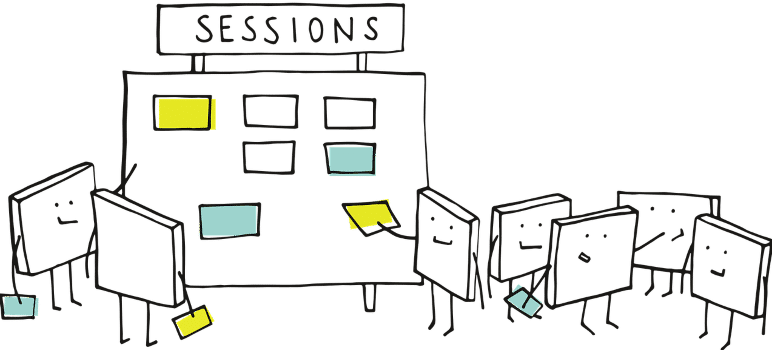
Essentially, a focus group discussion is a discussion of issues and concerns among a selected group of four to eight people. It serves as a venue to confirm and verify the participants’ viewpoints on certain issues, concerns, or problems, and draw out their experiences so that they are able to build a consensus about the research topic.
A focus group discussion is a discussion of issues and concerns among a selected group of four to eight people. It serves as a venue to confirm and verify the participants’ viewpoints on certain issues, concerns, or problems, and draw out their experiences so that they are able to build a consensus about the research topic.
A well-trained moderator guides the progress of the discussion using a set of qualitative research questions prepared by the researcher.
Let’s proceed to the main elements of a focus group discussion: 1. the selection of participants, and 2. the basic requirements of carrying out a focus group discussion.
1. Selection of Participants for the Focus Group Discussion
The participants of the FGD are selected using a set of guidelines or criterion such that the participants are able to give useful or relevant information to meet the research objectives. This requires familiarity with the background of the participants.
It is, therefore, common practice that managers, leaders of the community or those who have lived in the community for a while or someone familiar with the business of an organization are consulted before conducting an FGD. They know better which sectors are relevant to the issues at hand.
2. How to Do a Focus Group Discussion
Focus group discussions are designed according to the specific issues or concerns that the researcher wants to become more familiar with or explore when a knowledge gap exists.
For example, in a study on coastal resource use, if the issue relates to dynamite fishing in the coral reefs, the participants to look for include representatives from the groups of fishers, fish traders, former dynamite fishers, law enforcers, explosives suppliers, local policy makers, non-government organizations or associations, among others who have direct or indirect transactions in the community.
Avoid bias in the selection of participants such as including only those who are accessible or favoring a certain political group. There are certain guidelines to follow in recruiting the participants of an FGD.
The following are needed resources to conduct a focus group discussion.
A. Human resources
1. A trained moderator
The moderator may not necessarily be the researchers themselves but someone familiar with the issues to be discussed.
Hence, the moderator should confer with researcher before conducting the FGD process. Moderators should have a good background knowledge of the participants and must not involve themselves in the discussion, such as arguing with the participants.
Their main role is to 1) introduce and explain the questions, 2) clarify issues raised, 3) confirm responses, 4) encourage expression of ideas, among other related functions.
They summarize the process at the end of the discussion.
2. A note taker
The note taker records the progress of the FGD. They do not only list the oral expression of ideas of the participants but also their actuations or non-verbal expressions. They clarify points once in a while by getting the moderator’s attention on points that are not clear.
At the end of the focus group discussion, they furnish a copy of the transcripts to the participants as a matter of transparency. Doing so also prevents participant distrust in future interviews by researchers whether from their group or a different group on a different issue.
The quality of information gathered through the FGD depends to a large extent on the skill and keenness of the moderator and the note taker.
For best results, rapport between the researcher’s group and the participants should be made such that the participants will not inhibit themselves from freely expressing their ideas.
B. Materials
The following materials should be made available during the conduct of the FGD:
1. Recording equipment
The standard note pad and pencil or pen must always be available.
Although laptops, tablets, cameras, MPEG recorders, or anything electronic will work in an urban environment, a different situation exists in FGDs conducted in far-flung areas. Although these gadgets may be used to record data in the field, they are prone to many problems such as low batteries, breaking during the trip, getting submerged and damaged while wading a river, among others.
If electronic data recording equipment is an indispensable part of the FGD, then it should be weather and/or shock resistant to prevent losing valuable data. You may no longer have the opportunity to get back to the respondents to repeat the process if equipment breaks down.
2. Group memory
Group memory (see Brainstorming Tips) is something that the participants can refer to as the discussion takes place. The participants focus their attention towards this attention-getting list of questions and responses.
The group memory could be a set of Manila paper with pre-written questions, a whiteboard or blackboard, or a mini-projector if you may.
3. Attendance sheet
If you do research for somebody (say as a consultant) or in compliance with your thesis requirement, you need an attendance sheet because it serves as evidence that you really did the FGD. The attendance sheet will also help you find your respondents if you will need to go back and clarify points or contact them if there is a need to do so.
4. Global Positioning System
Having a Global Positioning System or GPS will aid you in locating the place where you did the FGD. This is good information to those who would like to make a follow-up study in a similar place.
You can download a GPS app in your phone to get the coordinates of the location where you held the FGD. The coordinates will also help you locate the specific sites where you conducted the FGD and plot them on a map to enrich your presentation.
The information derived from the FGD, aside from fulfilling an academic requirement, is useful in policy making and management. It can lead to agreement on certain controversial issues and evaluation of program or project accomplishments in the target community.
Example FGD Questions
Examples of questions that relate to illegal fishing in the coral reefs that will serve as the focus of the FGD are the following:
- What are the target fish species of the illegal fishers?

- How do the illegal fishers get their explosives?
- How much do the dynamite fishers earn from their activity?
- Why do the dynamite fishers engage in this illegal activity despite prohibition?
- What are the risks associated with dynamite fishing?
- At what time of the day and how frequent do the dynamite fishers go out to fish?
- Where are the dynamite fishers coming from?
Of course, the questions will ultimately depend on what information you would like to draw out from the participants. The FGD enables you to explore which variables you will include and focus the quantitative (if ever) part of your study.
You might want to relate fisher income with frequency of dynamite fishing. Or you might want to quantify the costs and benefits of dynamite fishing (taking the point of view of the fisher). The end justifies the means, so they say.
Additional Considerations in Doing the FGD
When certain groups of the community frequently become participants of a series of focus group discussions, there is a tendency towards respondent fatigue. This issue also arises when the questions are too extensive to handle; like spending 2-3 hours interviewing or engaging the participants.
To minimize the impact of giving stress to the participants as a result of a barrage of questions that take time to answer, the researchers may give tokens as appreciation of the time spent by the respondents. Whatever these are should be kept within project funds.
Thus, planning at the early part of the activity is essential. It helps prevent costly mistakes.
In many cases, the participants come from far away places. Thus, it makes sense to pay for their fare and food needs.
Just don’t overdo it as it may give them false expectations and expect the next group of researchers to pay them.
References
Jeong, Dahyeon, et al. “Exhaustive or exhausting? Evidence on respondent fatigue in long surveys.” Journal of Development Economics 161 (2023): 102992.
International Institute of Rural Reconstruction (1998). Participatory methods in community-based coastal resource management.
FAQ: How to Do a Focus Group Discussion
1. What is a Focus Group Discussion (FGD)?
FGD is a discussion of issues and concerns between a selected group of four to eight people. It serves as a venue to confirm and verify participants’ viewpoints and draw out their experiences so they can build consensus about the research topic.
2. Why is it sometimes called “focused group discussion”?
A focus group discussion may be called focused group discussion because the discussion focuses on questions that seek multi-stakeholder response, or it may refer to the ‘focus group’ – those who are found relevant to take part in tackling the issues raised by the researcher.
3. When should FGD be used in research?
FGD is used to solicit ideas that help answer or narrow down research topics, and to verify or confirm the results of surveys designed to answer research questions.
4. How are FGD participants selected?
Participants are selected using a set of guidelines or criteria such that they can give useful or relevant information to meet the study objectives. This requires familiarity with the participants’ backgrounds, and researchers typically consult managers, community leaders, or those familiar with the organization or community.
5. How many people should participate in an FGD?
An FGD typically involves four to eight people.
6. What human resources are needed to conduct an FGD?
Two key people are needed: a trained moderator or facilitator who introduces and explains questions, clarifies issues, and summarizes the discussion; and a note taker who records the progress of the FGD, including both oral expressions and non-verbal behaviors.
7. What materials are needed for conducting an FGD?
Essential materials include recording materials (notepads, pens, or electronic devices), group memory (Manila paper, whiteboard, or projector to display questions), an attendance sheet for documentation, and optionally a GPS device to locate where the FGD was conducted.
8. What is the role of the moderator in an FGD?
The moderator introduces and explains questions, clarifies issues raised, confirms responses, encourages expression of ideas, and summarizes the process at the end. The moderator should not involve himself in the discussion, such as arguing with participants.
9. How is FGD information useful beyond academic requirements?
Information derived from FGD is useful in policy making and management. It can lead to agreement on certain controversial issues and evaluation of program or project accomplishments in the target community.
10. What should be avoided when selecting FGD participants?
Avoid bias in the selection of participants, such as including only those who are accessible or favoring a certain political group.
© Simplyeducate.me | P. A. Regoniel