
Discover how to be keen—develop the sharp observational and analytical skills essential for graduate research. Learn how to cultivate a keen perception that enables you to identify meaningful research questions and advance scholarly inquiry through practical, experience-based insights.
Test your observation skill in the accompanying video.
Table of Contents
How do you develop a keen perception?
I thought about this topic recalling my previous post on the 5 qualities of a good researcher. This is a crucial trait that every researcher must develop.
Unlock The Power of Keen Perception: A Personal Journey to Incisive Observation
What if I told you that the key to groundbreaking research isn’t just in the data—but in the way you see it?
For years, I struggled to make meaningful connections in my work. I’d analyze reports, review studies, and still feel like I was missing something vital.
Then, I discovered a transformative skill: keen perception—the ability to observe with clarity, precision, and purpose.
This isn’t about being a “natural” observer. It’s a learned skill—one I’ve honed through trial, error, and deep reflection.
In this article, I’ll share my personal journey of developing incisive observation, and the mindset shifts that made all the difference.
If you’ve ever felt like you’re skimming the surface of your work—missing insights, overlooking patterns, or struggling to connect the dots—this is for you.
Let’s go.
How to Be a Keen Person
A phenomenon overlooked?
One morning, as I literally whizzed out there walking and running to finish my four-rounder and fulfill my quota of 3 miles around the Sports Complex located about two kilometers away from my home, something caught my attention.
I always see this thing every time I do my routine aerobic exercise using the 30-point system of Dr. Kenneth Cooper, and this should transpire within a period of 16 weeks.
I noted the period I did my exercise because only at the end of this training period did I really consciously look above me and ponder what I am seeing. I kept on ignoring this thing that always catches my attention every time.
What is this apparently ‘normal’ thing anyway?
It’s just the mercury lamp on an electric post that I notice lighted even if the sun starts to shine and illuminate the pathway.
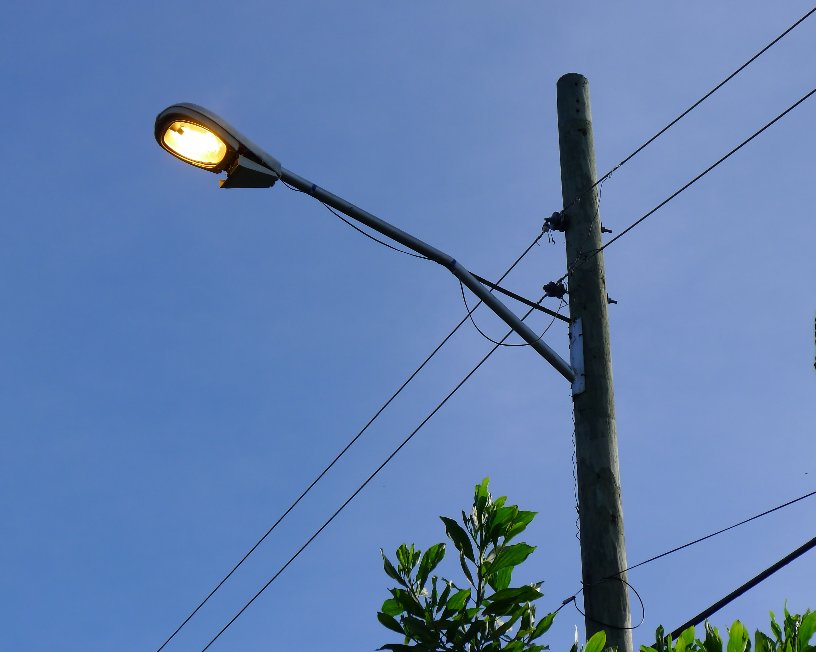
At 6:50 in the morning, when the sun is already up in the horizon, the mercury lamp is still lighted when it should be off.
I noticed that, actually, there are two of these mercury lamps along the path through which I walk and run four to five times a week.
Looking closely, I noticed that one of the lamps emits an orange light while the other emits fully bright white light.
I also noticed, just right beside the path a few meters away, the chirping birds and the red flowers of fire trees beautifying the landscape.
Once in a while, a mature seedpod would drop and crack, releasing the mature seeds inside; and the air smells fresh except when a vehicle passes through with its inexplicable, distinctive smell that disrupts the pace of my breathing as I avoid inhaling the foul air.
The significance of the lighted lamps, among other things
Have I already seen these lighted lamps before?
Yes, but not so detailed as I see it now.
Why?
That’s because I consciously opened my senses (eyes, ears, nose, and mind) and observed. This is unlike before where I just focused my attention on my walking or running pace, even ignoring fellow runners along the way.
But I did notice that one of those people who regularly exercise in the same way I do has a walking disability and need to be accompanied by someone, probably his sister or wife. I avoid close encounters so I don’t really know which. I might have known better if I greeted them and talked a little. I would have known.
What then is the significance of this observation?
This observation is useful especially to someone like me who is concerned with energy efficiency. Unnecessary energy is wasted in a lighted lamp that translates to electricity losses that consumers pay when the electricity bills come.
Unless they’re solar lamps that require no power from the conventional electrical grid.
How about that person with disability? There may be a good story behind why he had that and why he should walk almost everyday.
How about those regular walkers and runners that tread the same pathway? Do they have some health problems too?
What I just want to drive in here is that keenness, or an incisive mind, can be developed with conscious attempt to activate the different senses. You will gain that acuity in perception through time with conscious effort although there are those who are naturally endowed with such characteristics.
Novel writers, in particular, can be so detailed in their descriptions because they see things in so detailed a manner. And a researcher needs such skill because in doing so, many questions will arise.
What research questions could be asked from the observation?
I can hypothesize, for research purposes, that the reason why the lamps are still on is that passersby, probably drunkards, tried to destroy the lamp by throwing stones but hit the lower part of the bulb’s housing.
Notice that the lower part of the lamp housing is almost dangling. It is possible that the on-off mechanism that switches the lamp off when it’s daytime is damaged.
To verify this, of course, requires a closer look at the whole lamp.
How should I do that?
Probably I’ll climb up, or use a powerful binocular to find out.
This approach is analogous to the methodology I should use to provide answers to my query.
Many things can crop up out of this simple observation of something which appears to be ‘normal’. And it took just an open mind and incisive look at things.
In the case of the person with disability, it would be easy to just ask him or his companion directly about his condition and discover the reason. That’s a case study.
Many questions could arise just because of that simple tweak on one’s attention. Bear this account in mind and see a whole new world unfold right before your eyes.
Conclusion
In a world where information is abundant but insight is rare, the key to becoming a keen observer lies not in the tools we use—but in how we perceive the world around us.
By consciously engaging all five senses—sight, sound, touch, taste, and smell—we uncove a deeper, more holistic understanding of our environment. Each sense offers a unique layer of data, transforming ordinary observations into rich, meaningful insights.
When we engage our senses deliberately in the process of observation, we transition from passive recipients of information to active, critically aware researchers capable of identifying patterns, detecting anomalies, and extracting meaningful insights that often elude less attentive analysis.
This practice of sensory awareness transcends mere technique—it represents a cultivated epistemological stance, one that emphasizes intentional perception and mindful engagement with the environment.
By cultivating a heightened sensitivity to sensory input, researchers can move beyond surface-level data collection to a deeper, better understanding of their subject matter.
This approach encourages a deliberate slowing of cognition, fostering the kind of focused attention necessary to discern subtle interconnections and interpret complex phenomena with greater precision.
In this way, sensory awareness becomes not just a methodological tool, but a foundational component of rigorous, reflective inquiry.
So the next time you find yourself analyzing data, ask yourself: What am I missing?
Are you truly seeing, hearing, and feeling everything around you? Because sometimes, the most profound insights don’t come from a spreadsheet—they come from a moment of deep, sensory awareness.
Become keen. Observe with intention. And let your senses guide you to the truth.
Test your observation skills in the following video:
Enjoy!
© Simplyeducate.me | P. A. Regoniel