Are you or someone you love struggling with digital addiction? This article is your go-to guide to understanding and overcoming this increasingly common challenge.
Discover 8 powerful strategies that can help you regain control, reduce dependency, and restore balance in your digital life.
Whether you’re looking to break the cycle or simply learn more, this guide has something valuable for you — start reading now and take the first step toward a healthier relationship with technology.
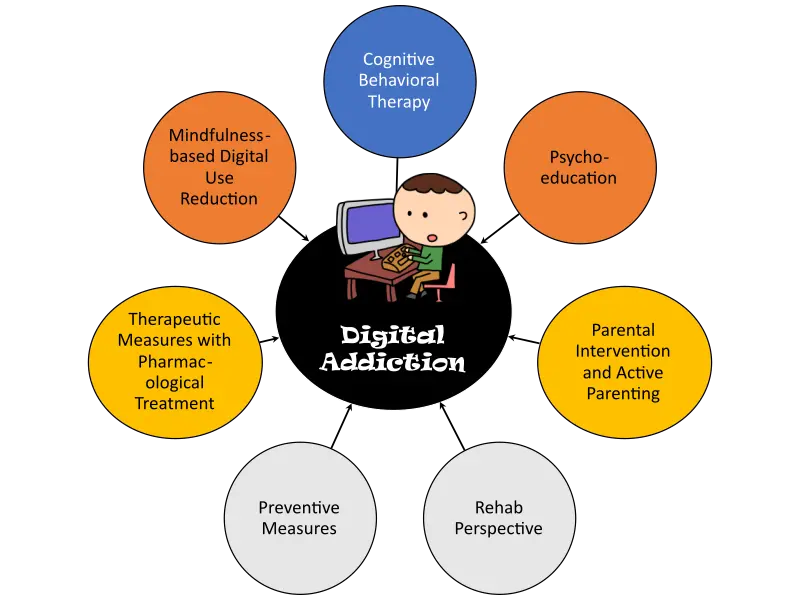
Table of Contents
Introduction
The digital age has created a growing crisis that pervades contemporary society: digital addiction. Understanding this significant problem requires comprehensive examination of its nature, underlying causes, and effects on individuals and society.
This examination explores the complexities of digital addiction through its theoretical frameworks, neurobiological mechanisms, and risk factors.
Additionally, it addresses the significant consequences of digital addiction, documenting the adverse effects of excessive screen time on physical, psychological, and social well-being.
Despite these concerning findings, evidence-based strategies exist to address this problem through improved digital hygiene practices and targeted therapeutic interventions. I list eight of those strategies here.
But let me walk you through a brief discussion on the theoretical framework and physiological aspect of digital addiction, its implications, and most important, measures to prevent this modern age “malady”.
The Theoretical Framework and Physiological Aspect of Digital Addiction
Digital Addiction is one of the rising phenomena associated with the rapidly evolving technological era. As digital platforms become increasingly involved in our daily experiences and interactions, comprehending the theoretical and physiological modalities underpinning their irresistibility is no longer a topic of fringe interest, but a dedicated area of scholarly pursuit.
This section explores the crucial dimensions of digital addiction’s theoretical framework and the entwined physiological aspects.
To initiate our comprehension, digital addiction, also referred to as Internet addiction or screen addiction, is categorized as a form of behavioral addiction with its theoretical framework consolidated from both social and cognitive-behavioral perspectives.
From a social perspective, the online world provides an arena for individuals to foster social connections, strengthening the ‘Social Identity Theory’ and the ‘Social Capital Theory’.
Social Identity Theory
The Social Identity Theory highlights a virtual identity developed by individuals, reinforcing their sense of belonging to digital platforms. It conceives the online platforms as social landscapes, where users navigate to affirm their self-concept through the prized sense of affiliation.
For example, a teenager who identifies as a gaming enthusiast may spend extensive time on platforms like Discord or Twitch, actively participating in gaming communities. Through regular interaction with fellow gamers, sharing gameplay strategies, and receiving validation from community members, the individual reinforces their identity as part of the gaming community.
This sense of belonging and social validation can drive compulsive platform use, as the user increasingly relies on these digital spaces to maintain their self-concept and social standing within the group. The fear of missing out on community interactions or losing status within the group may further intensify engagement, potentially contributing to addictive patterns of use.
Social Capital Theory
Meanwhile, Social Capital Theory emphasizes the creation and utilization of social resources online, which can yield personal gain and satisfaction, potentially exacerbating addictive behavior.
The allure of the online world contributes to a cognitive-behavioral rift, as described by the ‘Cognitive Behavioral Model of Pathological Internet Use’ (Davis, 2001). This model outlines how maladaptive thoughts and erroneous beliefs can lead to excessive internet use, where individuals become trapped in a cycle of compulsive online behavior, often feeling that disengagement would result in a loss of social or emotional rewards.
For instance, an individual who frequently engages in social media platforms may develop the belief that their self-worth is tied to the number of likes, comments, or followers they receive. This erroneous belief can lead to excessive time spent curating their online presence, checking notifications, or comparing themselves to others.
Over time, this behavior becomes habitual and difficult to break, as the individual experiences anxiety or distress when unable to engage with the platform.

The perceived benefits of online interaction—such as validation or connection—further reinforce the behavior, making it increasingly difficult to disengage, thus contributing to a pattern of pathological internet use.
Physiological Effects of Technology Addiction
As we progress deeper into this topic, it becomes evident that digital addiction is not solely a psychological manifestation; intrinsically winded are the far-reaching physiological effects.
Repeated engagement with digital platforms triggers a release of dopamine, the “feel good” neurotransmitter, in the brain’s reward system, enforcing the addictive behavior, mirroring the physiological response associated with substance abuse disorders.
Repeated engagement with digital platforms triggers a release of dopamine, the “feel good” neurotransmitter, in the brain’s reward system, enforcing the addictive behavior, mirroring the physiological response associated with substance abuse disorders.
Moreover, the digital platform design equipped with attention-capturing mechanisms like notifications, rewards ‘Digital Skinner Box‘, perpetuates the constant engagement, consistently activating the ‘fight or flight‘ stress response. Prolonged activation can have detrimental effects on overall health, including chronic stress, sleep disorders, and even cardiovascular issues.
In conjunction, the sedentary nature of the digital era contributes to physical health problems, including obesity and associated disorders. It is crucial to note that while digital addiction is not formally recognized by the Diagnostic and Statistical Manual of Mental Disorders (Edition, 2013), the substantial psychological distress and physiological repercussion indubitably acknowledge it as an escalating public health concern.

Implications of Information Age Problems Like Digital Addiction
In examining the implications of digital addiction as one of the disturbing information age problems, the concept of ‘Opportunity Costs’ provides valuable insight. The substantial time devoted to digital engagement often detracts from productivity, professional responsibilities, and personal relationships. This diversion from growth-oriented activities can hinder individual development and social progress, resulting in significant socio-economic consequences.
Let’s see the overall implications of digital addiction to a person’s well being.
Relationship between health, psychological wellbeing, and societal dynamics
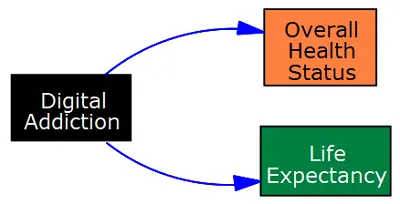
At the intersection of digital addiction and health, an emerging body of research highlights the adverse effects of compulsive digital behavior on physical activity, dietary habits, and overall lifestyle quality. Prolonged screen time is associated with a range of health complications, including cardiovascular diseases, musculoskeletal disorders, and metabolic dysfunctions.
These physical health issues are further compounded by the exacerbation of pre-existing conditions, thereby establishing a direct link between digital addiction and a decline in overall health status and life expectancy.
There is a direct link between digital addiction and a decline in overall health status and life expectancy.
Theoretical Models That Attempt to Explain the Outcomes of Digital Addiction
Various models can be used to explain the phenomena of digital addiction. Here are some of them.
Decreased Psychological Wellbeing Model
Shifting focus to the impact of digital addiction on psychological well-being, it is essential to consider the ‘Decreased Psychological Wellbeing Model’. This model outlines a cyclical process wherein excessive use of digital platforms contributes to the development of stress, anxiety, and depression, which in turn reinforce the addictive behavior.
This self-perpetuating cycle often leads to deteriorating mental health outcomes, undermining an individual’s cognitive, emotional, and social functioning.
Consider an individual who spends several hours daily on social media platforms. Over time, this excessive use leads to feelings of inadequacy and social comparison, contributing to heightened stress and anxiety.
As a result, the individual may turn to digital platforms more frequently as a coping mechanism, seeking validation or distraction. This increased usage, however, exacerbates the initial stress and anxiety, creating a self-reinforcing cycle that further deteriorates their mental health and impairs their ability to engage meaningfully in real-world relationships and responsibilities.
Attraction-Selection-Attrition Framework
The effects of digital addiction extend beyond the individual, influencing broader societal dynamics. One relevant theoretical framework is the ‘Attraction-Selection-Attrition Framework‘, which suggests that digital addiction may influence the formation and maintenance of social relationships, affiliations, and daily behavioral patterns.
Typically, social bonds serve as crucial support systems; however, digital dependence has been linked to increased attrition in these relationships. This phenomenon is accompanied by a decline in interpersonal skills, diminished emotional intelligence, and shifts in societal norms—only a fraction of the broader societal consequences associated with digital addiction.
Consider a group of friends who initially bonded through in-person interactions. Over time, one member becomes increasingly dependent on digital communication, relying heavily on messaging apps and social media to maintain connections.
As a result, the frequency of face-to-face interactions decreases, and the group’s cohesion begins to erode. The member’s reliance on digital platforms may lead to a reduced ability to engage in meaningful, in-person conversations, further distancing them from the group.
This shift exemplifies how digital addiction can influence the formation and maintenance of social relationships, contributing to the gradual weakening of social bonds and the transformation of societal interaction norms.

Photo by fempreneurstyledstock on Unsplash
Preventive Measures for Digital Addiction
Addressing digital addiction necessitates a multifaceted approach that considers its psychological, physiological, and social dimensions. Prevention is preferable to remediation, as digital addiction, like other behavioral addictions, is reinforced through habitual patterns of use.
Preventive strategies include promoting healthier alternatives to excessive digital engagement, such as 1. structured screen time limits, 2. designated offline periods, and 3. activities that encourage physical and social interaction. Encouraging digital literacy in educational settings can further equip individuals to navigate online spaces responsibly.
Technological design should also be reoriented to minimize addictive features, such as excessive notifications and stimulating content. Concurrently, fostering positive coping mechanisms—such as mindfulness, physical exercise, and balanced nutrition—can mitigate the psychological and physiological consequences of overuse.
Rather than advocating for digital abstinence, the focus should be on cultivating a balanced, mindful relationship with technology—often referred to as “digital hygiene.” Early detection and intervention, supported by validated screening tools, are also critical for effective management.
Ongoing research is essential to ensure that prevention and treatment strategies remain relevant in the face of rapidly evolving digital landscapes. A holistic approach that integrates individual, social, and technological interventions is key to achieving a sustainable balance between digital engagement and well-being.
Technology Addiction Solutions
When digital addiction is recognized to be present, the following approaches can help those affected live their life better and cope with the situation.
The advent of digital addiction has led to the implementation of multifaceted therapeutic approaches and interventions.
Studies have shown that an interdisciplinary methodology, employing cognitive behavioral therapy, psychoeducation, and active parenting strategies is promising.
Below are specific approaches and institutions that help combat the effects of digital addiction.
1. Cognitive Behavioral Therapy (CBT)
Cognitive Behavioral Therapy (CBT) has been observed to be effective in treating digital addiction.
The approach entails encouraging the individual to identify problematic behaviors and thought patterns linked to digital crutches, subsequently teaching them how to redirect these inappropriate impulses. By learning to confront and manage these intrusions, the individual can strive for a healthier relationship with digital mediums.
Let me illustrate this approach by giving an example.
A student frequently uses social media to cope with stress and feelings of loneliness, often checking their phone multiple times an hour. Through guided self-reflection, they identify this behavior as a maladaptive coping mechanism that interferes with their academic performance and sleep quality.
With the help of a therapist, they learn to recognize the triggers—such as anxiety or boredom—and practice alternative responses, such as journaling, going for a walk, or engaging in a hobby.
Over time, they develop greater awareness of their digital habits and are better able to manage their impulses, leading to a more balanced and intentional use of technology.
2. Psychoeducation
Psychoeducation, wherein this context, refers to systematic educational interventions designed to provide information and processes relating to digital addiction, has also shown efficacy in combating digital addiction.
These programs outline the psychological, social, and physiological implications of excessive digital use, hence creating an understanding and awareness about digital addiction. The knowledge gleaned can significantly help in reducing the time spent online and re-channel that into more productive activities.
Who provides these services? Here is a list of practitioners.
Educational Institutions
Educational institutions are increasingly addressing the psychological, social, and physiological impacts of excessive digital use by integrating digital literacy and wellness programs into their curricula. These programs aim to raise awareness about the potential risks of over-reliance on digital platforms and equip students with the skills to manage their online habits effectively.
By teaching students to recognize the signs of digital overuse and encouraging them to set boundaries around screen time, schools are fostering a more balanced relationship with technology.
Workshops on mindfulness, time management, and healthy online behavior further support this goal, helping students develop healthier digital habits from an early age.
Healthcare Providers and Mental Health Clinics
Healthcare providers and mental health clinics are also playing a crucial role in addressing digital addiction by incorporating it into their broader mental health care frameworks. These institutions offer behavioral therapy sessions that help individuals understand the psychological and emotional triggers behind their digital use.
Through guided reflection and therapeutic intervention, patients are encouraged to explore alternative coping strategies that reduce their dependence on digital platforms. This approach not only addresses the immediate symptoms of digital overuse but also supports long-term mental well-being by promoting healthier behavioral patterns.
Non-Profit Organizations
Non-profit organizations such as The Center for Humane Technology is actively raising awareness about the social and psychological effects of digital overuse. This organization run campaigns and provide resources that help individuals understand the impact of excessive screen time on their mental and emotional health.
They advocate for digital detox initiatives and promote healthier online behaviors by highlighting the benefits of reducing digital dependency. Through public education and community engagement, this organization helps shift the cultural narrative around digital use and encourages more mindful engagement with technology.
Companies that Incorporate Wellness Programs
Corporate wellness programs are also addressing the issue of digital overuse by incorporating initiatives that promote physical and mental well-being. Many companies encourage employees to take regular breaks from screens, offer mindfulness training, and promote physical activity as a way to counteract the physiological effects of prolonged digital engagement.
These programs not only support individual health but also contribute to a more productive and focused work environment by helping employees manage their digital habits more effectively.
Public Health Agencies
Public health agencies in various countries have launched national awareness campaigns to educate the public about the risks of excessive digital use. These campaigns often include guidelines for healthy screen time and strategies to reduce digital dependency.
By raising awareness at the societal level, these initiatives aim to foster a collective understanding of the importance of maintaining a balanced relationship with technology. The goal is to equip individuals with the knowledge and tools they need to make informed choices about their digital habits, ultimately leading to healthier and more productive lifestyles.
Technology Companies
Technology companies are also contributing to the effort by developing tools that help users monitor and manage their digital habits. Features such as Apple’s Screen Time and Google’s Digital Wellbeing app allow users to track their usage patterns and set limits on app usage.
These tools encourage more intentional engagement with technology by providing users with greater awareness of their digital behavior. By offering these features, tech companies are taking steps to support users in developing healthier relationships with digital platforms.
3. Parental intervention and active parenting strategies
Parental intervention and active parenting strategies are pivotal, especially for adolescents.
Guidance about the responsible use of technology can help young people understand the potential implications of overuse.
Parents encouraged to model healthy digital habits can contribute to reducing the incidence of digital addiction among children and adolescents.
4. Mindfulness-Based Digital Use Reduction (MBDUR)
Mindfulness-Based Digital Use Reduction (MBDUR) employs an emphasis on maintaining an increased awareness of the present moment, promoting self-regulating behavior significantly. It combines mindfulness practices and psychoeducation about the social and personal consequences of excessive digital use.
The Mindfulness-Based Digital Use Reduction (MBDUR) approach originates from the broader field of mindfulness-based interventions (MBIs), which have their roots in Buddhist meditation practices and were later adapted for modern psychological and therapeutic applications.
These practices were popularized in the West by figures such as Jon Kabat-Zinn, who developed Mindfulness-Based Stress Reduction (MBSR) in the 1970s. MBDUR builds on these principles by applying mindfulness techniques specifically to the context of digital overuse.
The MBDUR approach works by encouraging individuals to develop present-moment awareness of their digital behaviors. This involves observing the urge to check devices, scroll through feeds, or engage in online interactions without immediate reaction.
Through regular mindfulness practices—such as meditation, body scans, and mindful breathing—individuals learn to recognize the triggers and emotional states that lead to excessive digital use.
In addition to mindfulness, MBDUR incorporates psychoeducation about the social, psychological, and physiological consequences of overuse. This helps individuals understand the long-term impact of their behavior, which can motivate them to make intentional changes.
By combining awareness with education, MBDUR fosters self-regulation and empowers individuals to cultivate a healthier relationship with digital technology.
5. Therapeutic measures with pharmacological treatment
In some cases, therapeutic measures may need to be bolstered with pharmacological treatment.
Antidepressants, mood stabilizers, and opioid receptor antagonists can sometimes be utilized to manage the crippling withdrawal symptoms associated with digital addiction.
6. Preventive measures
Preventive measures include implementing self-control strategies, such as time scheduling with balanced outdoor activities, and digital detoxes, taking prolonged breaks from all digital technology.
These preventive measures can be highly instrumental in fostering digital resilience.
7. Digital literacy
Digital literacy, encompassing the basic understanding of digital media’s workings and implications, is another preventive strategy that requires due emphasis.
Education about the mediums and content consumed can enable individuals to handle digital interactions more responsibly and safely.
8. Rehab perspective
The rehab perspective also speaks to the needs for consistent monitoring and early detection of digital addiction. Screenings conducted at regular intervals, especially amongst vulnerable populations such as adolescents, can be the vital key in arresting the problem at an early stage, providing prompt medical and psychological interventions.
In a school-based mental health program, students in grades 6 through 12 are periodically screened for signs of digital overuse using standardized questionnaires such as the Problematic Use of the Internet Scale (PUIS) or the Digital Addiction Scale (DAS; Hawi, 2019). These assessments are conducted every semester and include questions about frequency of use, emotional reliance on digital platforms, and the impact of screen time on academic performance and social relationships.
If a student’s responses indicate a high risk of digital addiction, the school counselor collaborates with the student’s parents and, if necessary, a mental health professional to develop an intervention plan. This may include individual counseling sessions that incorporate cognitive-behavioral techniques and mindfulness training to help the student become more aware of their digital habits and develop healthier alternatives. The student may also be encouraged to participate in group sessions where peers share experiences and support one another in reducing excessive screen time.
Regular follow-up screenings are then conducted to monitor progress and adjust the intervention as needed. This early detection and consistent monitoring approach helps prevent the escalation of digital addiction and ensures timely support for those at risk.
Summary of Key Ideas
Significant progress has been made in the development of therapeutic interventions for digital addiction; however, further research remains essential to fully understand and address this growing concern.
Unraveling the complex interplay between the appeal of digital technologies and the development of addictive behaviors necessitates continued and in-depth investigation. As digital environments evolve over time, researchers, psychologists, and healthcare professionals must remain vigilant and adapt treatment strategies to effectively address the needs of individuals affected by digital addiction.
A central guiding principle is to harness the benefits of digital technology while mitigating its potential harms. Achieving this requires maintaining a delicate balance—recognizing technology as a tool for empowerment rather than a source of compulsion.
The increasing prevalence of digital addiction in contemporary society underscores the need for a proactive and deliberate approach to its management. Importantly, viable solutions exist, and they are accessible to those willing to engage with them. Through heightened awareness and disciplined implementation of preventive strategies, such as digital hygiene, individuals can effectively manage their digital engagement without falling prey to its negative consequences.
Therapeutic interventions grounded in empirical evidence and scientific validation further strengthen the path to recovery. By integrating both preventive and therapeutic approaches, it is possible to foster a balanced coexistence with digital technologies, ensuring that they serve as enhancers of human life rather than contributors to dependency and dysfunction.
References
Davis, R. A. (2001). A cognitive-behavioral model of pathological Internet use. Computers in Human Behavior, 17(2), 187-195.
Edition, F. (2013). Diagnostic and statistical manual of mental disorders. Am Psychiatric Assoc, 21(21), 591-643.
Hawi, N. S., Samaha, M., & Griffiths, M. D. (2019). The digital addiction scale for children: Development and validation. Cyberpsychology, Behavior, and Social Networking, 22(12), 771-778.
Frequently Asked Questions (FAQs)
What are the causes of digital addiction?
Digital addiction is driven by a combination of social, psychological, and neurobiological factors. From a social perspective, platforms fulfill a deep human need for belonging and social validation, explained by Social Identity Theory and Social Capital Theory. Neurologically, digital platforms are intentionally designed with engagement loops (like notifications and variable rewards, often called a “Digital Skinner Box”) that trigger the release of dopamine in the brain’s reward system—mirroring the physiological responses seen in substance-related addictions. Additionally, maladaptive thoughts (such as tying personal self-worth to online likes, comments, or followers) and using screens as a coping mechanism for stress, anxiety, or boredom further reinforce compulsive use.
What digital addiction treatments are available?
A multi-disciplinary and evidence-based approach is most effective for treating digital addiction.
Key interventions include:
Cognitive Behavioral Therapy (CBT): Helps individuals identify problematic thoughts and behaviors, recognize triggers, and replace digital crutches with healthier coping habits.
Psychoeducation: Educates individuals, families, and communities about the psychological, social, and physiological risks of screen overuse to encourage mindful self-regulation.
Mindfulness-Based Digital Use Reduction (MBDUR): Combines mindfulness practices (like present-moment awareness and meditation) with education to help individuals pause and manage the impulse to scroll or check devices.
Pharmacological Treatment: In severe cases, medications such as antidepressants, mood stabilizers, or opioid receptor antagonists may be used under medical supervision to manage acute withdrawal symptoms.
Institutional and Support Frameworks: School screening programs, counseling, parent-guided boundary setting, and corporate wellness initiatives also play a critical role.
What are digital addiction effects that need to be addressed?
The consequences of digital addiction span physical, psychological, and social dimensions:
Physical Health: Prolonged sedentary behavior and constant “fight-or-flight” stress responses can lead to sleep disorders, chronic stress, cardiovascular issues, obesity, metabolic dysfunctions, and musculoskeletal problems.
Psychological Well-Being: As outlined by the Decreased Psychological Wellbeing Model, excessive use fuels a self-perpetuating cycle of stress, anxiety, and depression.
Social and Societal Dynamics: According to the Attraction-Selection-Attrition Framework, digital dependency erodes real-world relationships, weakens social bonds, diminishes interpersonal and emotional intelligence skills, and creates opportunity costs that hurt academic and professional productivity.
Are there enough digital addiction scientific articles that can serve as basis for treatment?
Yes. While digital addiction (or internet/screen addiction) is still evolving as a formal clinical diagnostic category, it is supported by a growing body of scholarly and empirical research. Researchers rely on validated screening and assessment tools—such as the Problematic Use of the Internet Scale (PUIS) and the Digital Addiction Scale (DAS)—alongside neurobiological and cognitive-behavioral studies to shape evidence-based prevention and treatment protocols.
What digital addiction research adequately explains the causes of this phenomenon?
Several key theoretical models and frameworks successfully explain the mechanics behind digital addiction:
The Cognitive Behavioral Model of Pathological Internet Use (Davis, 2001): Explains how erroneous beliefs and maladaptive thoughts trap users in cycles of compulsive online behavior.
Social Identity and Social Capital Theories: Detail how virtual environments fulfill human desires for community affiliation, self-concept affirmation, and social resources.
Neurobiological and Behavioral Research: Studies examining the “Digital Skinner Box” design mechanism and dopamine-driven reward pathways clearly outline why digital Fpossess such high compulsive pull.
What are the types of digital addiction?
While digital addiction broadly encompasses screen and internet overuse, experts commonly break it down into several specific sub-types:
Social Media Addiction: Compulsive scrolling, posting, and seeking validation through likes and comments on platforms like Instagram, TikTok, or X.
Internet Gaming Disorder (IGD): Excessive and uncontrollable playing of video games, often heavily tied to online multiplayer communities and streaming platforms like Twitch or Discord.
Cyber-Relationship Addiction: Over-involvement in virtual relationships, online dating, or excessive messaging at the expense of face-to-face social bonds.
Compulsive Information-Seeking: An obsessive need to constantly gather, surf, or organize data, news, and feeds online, leading to mental fatigue and diminished productivity.
Online Compulsions: Compulsive digital behaviors such as online gambling, trading, or excessive e-commerce shopping.
Online Sexual/Pornography Addiction: Compulsive engagement with cybersex and online adult content.
© Simplyeducate.me | P. A. Regoniel