
Updated: February 23, 2026
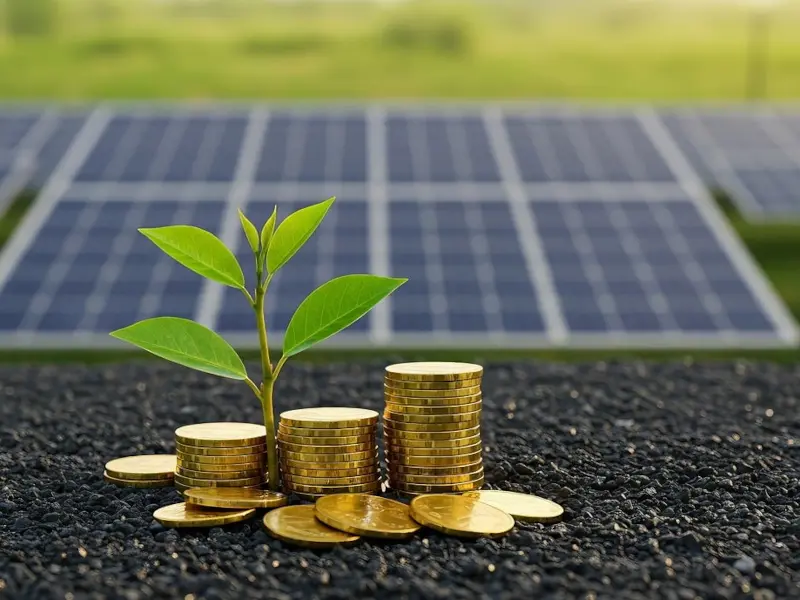
What is environmental economics? What is the purpose of environmental economics? This article defines the concept in view of sustaining environmental resources.
Students of environmental science will find themselves dealing with environmental economics concepts in their senior years while taking the environmental science course.
Thus, it pays to learn the basics of the subject for greater understanding and the application of the tools of economics.
As the word connotes, environmental economics is about the economics of the environment. But what, specifically, is economics and what is the concern about environmental economics?
First things first; it will be easier to understand the subject by defining some terms for common understanding. Let us define what is economics then before proceeding to the definition of environmental economics.
What is Economics?
Harper [1] defines economics to literally mean “household management.” This word was derived from Latin oeconomia and from Greek oikonomia meaning “household management.”
Further, Quizlet.com[2] defines economics as the study of how and why individuals and groups decide about the use and distribution of valuable human and non-human resources. That’s the longer definition.
For simplicity and for our purposes, and based on the latter definition, economics can be defined simply as the study of how humans decide on how to dispose of resources.
Economics considers resources, whether human or non-human, as scarce or finite, and these are not in abundance. When resources are scarce and tend to get depleted, then people must maximize its use. And when people need these resources badly, then these are valuable resources. Economics then deals with management of scarce resources.
Now, we’ll focus our attention on environmental resources and define environmental economics.
What is Environmental Economics?
Drawing out from the definition of economics, we can define environmental economics as the study of how humans decide on how to dispose of environmental resources. At this juncture, the focus of management is mainly on environmental and natural resources.
Environmental economics is the study of how humans decide on how to dispose of environmental and natural resources.
But what consists of environmental resources?
To make clear this concept, I enumerate some of the environmental resources below that man derives benefit from and need to be managed:
General
air, water, and land
Specific
- trees or plants that supply the life-giving oxygen humans need;

- crops that provide food to humans;
- clean drinking water to keep human metabolism working and flush out bodily wastes;
- metals that serve as raw materials for human ingenuity, such as the creation of tools, rigid structures for abode and cars for transport; and
- oil to fuel industries that manufacture products that people need.
Of course, the list could go on. There are so many other environmental resources that you can think of that are used to satisfy human needs and wants.
Ideally, all human needs and wants should be fulfilled, but this is far from reality.
Why?
That’s because human needs and wants vary. Needs may be fulfilled but wants are virtually without limit. This situation becomes problematic because environmental resources have limits.
Thus, both resources and human needs and wants must be managed in order to attain a certain level of balance between human needs and the availability of resources to fill that need.
So what has environmental economics got to do with human needs and wants?
Let’s proceed to the main purpose of environmental economics.
Purpose of Environmental Economics
The main purpose of environmental economics is to attain environmental resource sustainability. It is only an instrument by which human needs and desires or wants may be addressed, as much as possible, without depleting finite environmental resources.
The processes or tools applied in environmental economics, such as economic valuation, cost-benefit analysis, and market-based instruments, play a crucial role in clarifying options for decision making.
Economic valuation, in particular, helps quantify the worth of environmental resources, enabling policymakers, businesses, and communities to make informed choices that balance economic
development with the long-term sustainability of finite natural resources.
To illustrate, economic valuation helps policymakers and stakeholders assign a monetary value to natural resources, such as forests, clean water, and clean air, that are otherwise taken for granted.
By quantifying the worth of these resources, governments and organizations can weigh the economic costs and benefits of exploiting or conserving them, leading to more informed and balanced decisions that serve both human interests and environmental health.
Example of Environmental Economics
A practical example of the application of environmental economics is the management of a rainforest.
Without environmental economics, a government might allow large-scale logging to generate revenue and meet the demand for timber, without fully accounting for the long-term consequences of deforestation.
However, by applying economic valuation, the government can calculate the total economic value of the rainforest — including its role in carbon sequestration, water regulation, biodiversity, and eco-tourism — and compare it against the short-term gains from logging.
In many cases, the long-term economic value of preserving the forest far outweighs the immediate profits from its destruction.
This approach empowers decision-makers to adopt sustainable policies, such as regulated logging or reforestation programs, that satisfy human needs while ensuring the rainforest remains a viable resource for future generations.
Conclusion
Environmental economics plays a vital role in shaping how humans interact with and manage the natural world.
As discussed in this article, it is rooted in the fundamental principles of economics — the management of scarce resources — but with a focused lens on the environment and its finite resources.
From the air we breathe to the metals that fuel our industries, environmental resources are the backbone of human survival and economic activity, making their sustainable management not just an option, but a necessity.
The challenge, however, lies in reconciling unlimited human needs and wants with the limited availability of environmental resources. This is where environmental economics proves its value.
By employing tools such as economic valuation, cost-benefit analysis, and market-based instruments, it provides a structured and rational approach to decision making that considers both human welfare and environmental health.
Environmental economics does not seek to halt economic progress, but rather to guide it in a direction that ensures resources remain available for generations to come—the essence of sustainable development.
Ultimately, understanding environmental economics is not solely the concern of policymakers and economists. Students of environmental science, business leaders, and even ordinary citizens stand to benefit from grasping its core concepts.
When people understand the true value of environmental resources and the consequences of their depletion, they are better equipped to make responsible choices in their daily lives.
In this way, environmental economics serves as both a scientific discipline and a practical guide toward a more sustainable and balanced future for humanity and the planet.
Related Readings
Willingness to pay example: Drivers’ WTP to reduce air pollution
Economic valuation: What is change-in-income technique?
References
[1] Harper, Douglas (November 2001). “Online Etymology Dictionary – Economy“. Retrieved October 27, 2007.
[2] Quizlet.com. Definition of economics.
FAQ: What is environmental economics?
1. What is environmental economics?
Environmental economics is the study of how humans manage and allocate environmental resources, such as air, water, land, trees, crops, metals, and oil, which are finite and essential for human survival and well-being.
2. What is the purpose of environmental economics?
The main purpose is to achieve sustainability of environmental resources by balancing human needs and wants with the limited availability of natural resources.
3. How does environmental economics relate to economics?
Environmental economics is a branch of economics that focuses on the management of scarce environmental resources, applying economic principles to address environmental issues.
4. Why are environmental resources considered scarce?
Environmental resources are limited and can be depleted over time, especially when human needs and wants are unlimited, creating a need for careful management.
5. What types of environmental resources are mentioned in the article?
The article lists air, water, land, trees, crops, clean drinking water, metals, and oil as key environmental resources that humans depend on.
6. How does environmental economics help in decision-making?
It uses tools like economic valuation to assess the worth of environmental resources and helps make informed choices that promote long-term sustainability.
7. Why is it important to manage human needs and wants in relation to environmental resources?
Because human needs are finite but wants are virtually limitless, managing both ensures that environmental resources are not depleted beyond recovery.
8. What is the role of economic valuation in environmental economics?
Economic valuation helps assign monetary value to environmental resources, enabling better decision-making in policy and resource allocation.
9. Why should students of environmental science learn about environmental economics?
Understanding environmental economics helps students apply economic tools to real-world environmental challenges and supports sustainable resource management.
10. How does environmental economics contribute to sustainability?
It provides frameworks and tools to balance human demands with environmental limits, ensuring that natural resources remain available for future generations.
© Simplyeducate.me | P. A. Regoniel