

Discover how to reduce researcher bias in social research and ensure your findings are accurate, credible, and free from unintended influence.
This article reveals practical, evidence-based strategies—like reflexivity, triangulation, and peer review—that help researchers recognize and minimize bias at every stage of the study.
Whether you’re a student, early-career researcher, or seasoned academic, these tools will strengthen your methodology and boost the integrity of your work. Read on to transform your research process.
Table of Contents
Introduction
One of the essential considerations in research involving people’s responses (i.e., social research or qualitative research in general) is to reduce or eliminate researcher bias. If a researcher investigates in a biased manner, the research outcome becomes inaccurate and unreliable.
Suppose the results of a study are unreliable, inaccurate, or invalid. In that case, questions will arise on many fronts, and doubts regarding the study’s conclusions will compromise its publication in a refereed journal.
In businesses, decision-making based on the study results and conclusions will be faulty, thus leading to profit loss or inability to solve organizational or operational problems. Researcher bias can distort the truth.
But what causes bias, and how can you, as a researcher, avoid it?
What is Researcher Bias?
A relevant definition of bias in the Bing dictionary states thus: “bias is an unfair preference for or dislike of something.” In the research context, this means that the researcher does something that favors or skews towards a specific direction. The researcher may deliberately or inadvertently commit it.
Thus, we can define researcher bias as:
Researcher bias is an unfair preference or inclination that causes a researcher to favor or skew their study toward a specific direction, outcome, or interpretation. This bias can occur either deliberately (intentionally manipulating methods, data, or conclusions) or inadvertently (unconsciously allowing personal beliefs, expectations, or preferences to influence the research process).
Researcher bias is an unfair preference or inclination that causes a researcher to favor or skew their study toward a specific direction, outcome, or interpretation.
In essence, researcher bias represents any systematic deviation from objectivity where the researcher’s actions, decisions, or interpretations are influenced by personal preferences, beliefs, or expectations rather than being guided purely by the data and scientific rigor.
How to Reduce Researcher Bias and Suggested Solutions
While it will be difficult to eliminate all sources of researcher bias in the conduct of your research, being aware of the following common pitfalls in the practice of research is desirable:
1. Personal convenience in data collection
Many of those who conduct research fail to do good research because they want to do it conveniently. For example, instead of getting a random sample of respondents, he may interview anyone that gets in his way. This approach is not an objective way of getting a sound model from a given population of the study.
Suggested Solution:
- Ask yourself the question: “Am I doing this part of the research for my convenience?” If you are, then recognize that this will introduce bias and reduce research quality.
- Select respondents randomly.
2. Favoring your own stand
While the nature of your research may be argumentative, favoring a preconceived position on the subject you are investigating will cause bias in your results. You will tend to steer the results of your study in the direction that you want.

Suggested Solution:
- Stick to what your data shows.
- Do not manipulate the results.
3. Inadequately prepared questionnaires
Inadequately prepared questionnaires can lead to many biases in the results of your study. Make sure that you follow acceptable practices in preparing questionnaires.
Suggested Solution:
- Read reliable references on how to prepare questionnaires objectively. AI tools make this easier and faster than before.
- Once you are ready with your questionnaire, validate it to a non-respondent group.
- Make changes when appropriate.
This situation means that you should take enough time to prepare your questionnaire. It is better to start right than having doubts about your data’s reliability, validity, or accuracy later on.
4. Faulty Data Collection Procedure
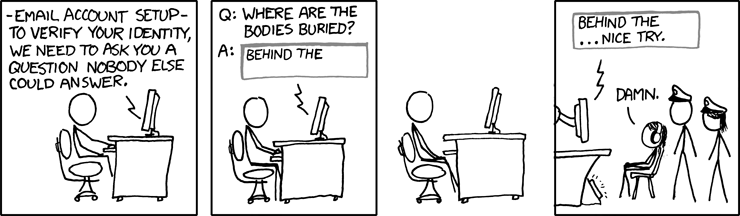
Watch out for unreliable answers to the questions that you posed. It is possible that the following occurred during the data collection:
- respondents are agitated, so they answered quickly without pondering the questions,
- you asked leading questions or questions that make people choose because you mentioned the choice,
- you answered the questionnaire for your Respondent because of your impatience in waiting for the response,
- the questions are not stated clearly,
- the Respondent has no experience on the subject you are asking about,
- other parties were present at the time of the interview that influenced Respondent’s ideas or thoughts,
- the questions are too long such that the Respondent gets tired of having to respond to those questions, and
- respondents fear that their answers may incriminate them.
Suggested Solutions:
- make sure that the respondents are ready and willing to be interviewed,
- don’t provide the choices to the respondents in personal interviews,
- be patient in administering questionnaires,
- ensure that the questions are clear enough for understanding by laymen,
- evaluate the capability of the respondent in answering the questions,
- conduct personal interviews in places, not within the hearing distance of others,
- prepare questionnaires that will be finished in a reasonable amount of time (some suggest 30 minutes is excellent), and
- explain to your respondent that their answers will not be held against them.
5. Unverified Information
Sometimes, researchers rely on just one source of information in making their conclusions. This practice will be full of biases.
Suggested Solution
Triangulation may be employed to avoid this pitfall. The post titled Data Accuracy, Reliability and Triangulation in Qualitative Research discusses this issue.
The whole point of this discussion is that the researcher should take all precautions against doing things that may impact negatively or threaten data accuracy and reliability.
Therefore, researchers must be neutral and objective-minded in carrying out their study to avoid researcher bias.
6. Use Clear Language
It’s important to use simple, straightforward language in questionnaires because overly complex or technical terms can confuse respondents and lead to misunderstandings.
When people don’t fully understand the questions, they may guess, misinterpret, or answer in ways that don’t reflect their true thoughts or experiences—this is a form of response bias.
By using clear, everyday language, researchers can ensure that all participants, regardless of their background or education level, understand the questions equally well. This reduces the risk of bias in the responses and increases the accuracy and reliability of the data collected.
Ultimately, clear language promotes fairness, inclusivity, and more valid research findings.
FAQ: How to Reduce Researcher Bias in Research
1. What is researcher bias?
Researcher bias is an unfair preference or inclination that causes a researcher to favor or skew their study toward a specific direction or outcome. It can happen deliberately or unintentionally, influencing how research is designed, conducted, and interpreted.
2. Why is reducing researcher bias important?
Reducing researcher bias is crucial because it ensures your research findings are accurate, credible, and trustworthy. Bias can distort results and undermine the validity of your study, affecting how your work is received and used by others.
3. What are the main methods to reduce researcher bias?
The main methods include reflexivity (reflecting on your own assumptions and beliefs), triangulation (using multiple data sources and methods), peer review (having colleagues examine your work), and using clear, simple language in questionnaires.
4. What is reflexivity in research?
Reflexivity is the practice of examining and reflecting on your own biases, beliefs, and assumptions throughout the research process. It helps researchers become aware of how their personal perspectives might influence their work.
5. How does triangulation help reduce bias?
Triangulation involves using multiple data collection methods, sources, or researchers to examine the same research question. This approach provides different perspectives and helps verify findings, reducing the likelihood that bias from one method will distort results.
6. What role does peer review play in reducing bias?
Peer review involves having other researchers examine your methodology, data, and conclusions. These external reviewers can identify potential biases you might have missed and provide objective feedback to strengthen your research.
7. Can researcher bias be completely eliminated?
While researcher bias cannot be completely eliminated, it can be significantly reduced through awareness, systematic methods, and transparent practices. The goal is to minimize its impact on your research findings.
8. Who should read this article?
This article is designed for social science researchers, students, academics, and anyone conducting qualitative or quantitative research who wants to improve the integrity and credibility of their work.
© Simplyeducate.me | P. A. Regoniel