
Table of Contents
Introduction
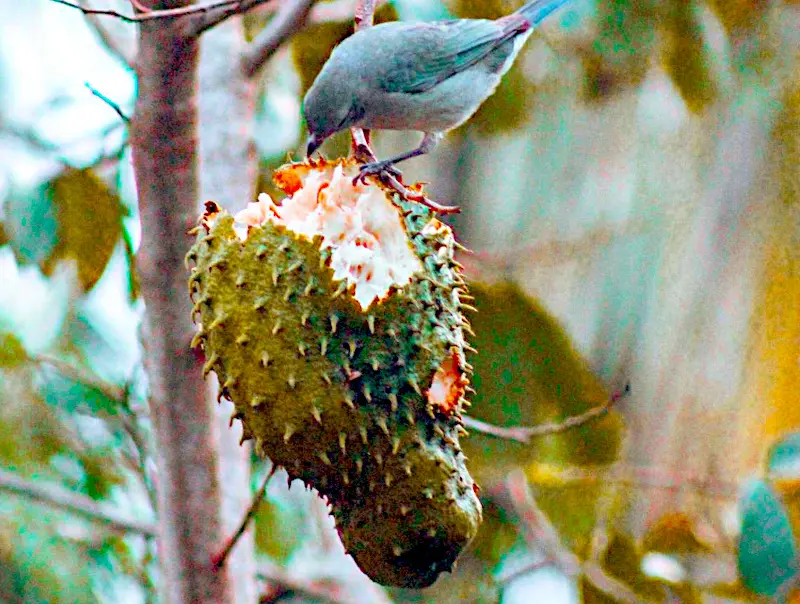
One of my favorite fruits to eat is the soursop (Annona muricata, graviola). But from experience, I can never seem to get it eaten right whenever I buy one.
There are times I slice it too early, or I slice it in half when it’s already too ripe. The former is not sweet enough, while the latter is too mushy and less sweet when overripe. Eating the soursop fruit at its best state is still a challenge for me.
I know there are ways to check whether the fruit is ripe enough to be opened. A surefire way is to hold it in my hand and squeeze it a little to see if it’s soft enough. But judgment sometimes isn’t good enough, so there’s still an element of doubt whether the fruit is in its best state to slice.
Also, when buying soursop fruit in the market, I’m not quite sure if the picker picked the fruit when it was already mature. That’s because size alone is no guarantee that the soursop fruit is mature. Some soursop fruits may be small but already mature, while there are large ones that are not mature.
I find testing whether soursop is mature or not a challenge, especially when my taste buds are already yearning to taste the sweet and sour flavor of the fruit. If it’s a large one, chances are, after finishing it off, my teeth become sensitive, and eating other food becomes uncomfortable due to the tingling sensation of sensitive teeth. We aptly call that “mangilo” in our dialect.
But I can’t resist the temptation of eating soursop each time I buy one or someone gives it to me. It’s so darn good to taste.
And the best part of eating soursop—it has a lot of health benefits I’ve come to know. I’ll share them all with you in the next section.
10 Soursop Benefits to Health
Soursop benefits to health are many based on the numerous references I examined for the past 30 years or so. I came to know these amazing health benefits of soursop while researching for natural ways to deal with cancer for my late wife. She endured 24 years of living with thyroid cancer—a friendly cancer they say because it’s slow growing. Nevertheless, it’s still cancer and we always dread hearing the word.
Since Dobb created a video to list the benefits, I show the video here. I also listed reliable references in the next section. You can make follow-up readings of the scientific materials I provided.
To quickly summarize the 10 soursop benefits narrated in this video, here’s the list:
- Strengthens the immune system,
- Helps reduce stress and anxiety,
- Hydrates the body,
- Benefits the eyes,
- Has antibacterial properties,
- Stabilizes blood pressure,
- Combats constipation,
- Reduces inflammation,
- Helps prevent diabetes, and
- Has promising anti-cancer properties.
The soursop property that appeals the most to me is the anti-cancer properties.
I have done an extensive review of research on soursop in the past and have come across studies that support the apoptotic effects of soursop. It has promising anti-cancer effects, due to an active compound called annonaceous acetogenins that can kill certain types of cancer cells, namely those in the liver, breast, pancreas, and prostate.
I am particularly interested in the last type because I was diagnosed with the condition way back in 2011. I was advised to undergo surgery but I opted not to. I was warned by the doctor that I might be suffering from bone pain in the next five years if left untreated.
My decision was influenced by one of the scientific articles I’ve read stating that the lifespan of those who underwent surgery and those who did not are the same. The doctor would not believe me, saying I may have just read a blog, hinting that it’s a simple claim with no scientific basis. But I’m confident it’s a scientific study in a peer-reviewed article, not an opinionated blog.
Well, that’s fourteen years ago. I tried to explore all possible natural remedies I could get my hands on. And taking soursop is one of them.
I was hoping that somehow in the future there will be a surefire remedy for the prostate condition, whether cancerous or not. I know that prostate enlargement comes with age and I don’t want the discomfort associated with current prostate treatment protocols.
I thought a needle biopsy would be bad for me given the belief that whatever causes that enlargement is a bodily response that must not be disturbed. Needles would introduce foreign material and destroy the protective covering that the body created and may cause distant metastases.
I wouldn’t let that to happen. Let the body do its own bidding whenever possible.
I came across a TikTok post on the benefits that could be derived from soursop by directly consuming the leaves. The common preparations require the preparation of tea. The two men maintain a plantation of soursop for this purpose.
Since I planted two soursop plants in my yard, I started eating a leaf daily, both as a preventive and curative approach. I wanted to reap all the benefits I could get from herbs that have been used for generations to address body imbalances.
I just make sure that I don’t overdo it due to potential side effects. So I take just a leaf a day to see its effects. If I feel better, I just stop taking it.
The dosage issue is always a challenge: How much to take, and how frequently should it be taken?
In the absence of human clinical trials, it’s largely a personal decision. Consume with care. Consult a natural health practitioner if in doubt.
Which one is best to consume to gain more benefits? Leaf or Fruit?
For sure, you can derive benefits from both the leaves and the fruits of soursop. But given that it takes time to produce the fruit and to maintain regularity in intake, eating the soft leaves is a sustainable one.
Everyday, I pick off a leaf from the soursop tree I planted in the yard two decades back. I planted two of them to ensure I got a constant supply of leaves as well as fruits.
The two trees have been there quite a long time before they bore fruit. I don’t know why it some time time for them to grow and produce fruits. [Or maybe I have not been so observant and missed the ripe fruits before they obviously catch my attention.]
In fact, I saw it bore fruits a few weeks ago. I saw two big ones: one about a fistful size, and the other about 6 inches in length.
To prevent the fruit from being eaten by birds while anticipating they’re mature enough to be consumed, I bought transparent bags to wrap around the fruits. The next day, I looked up again intending to use the plastic bags I bought.
Here’s what I saw.
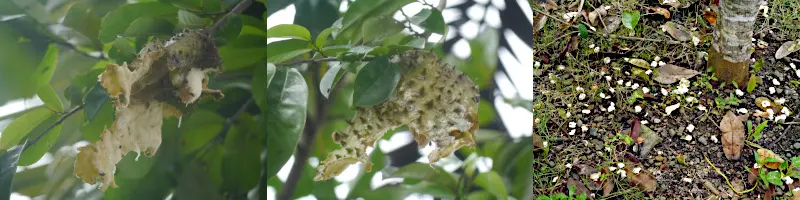
The big fruit is gone. As well as the small one. I was late a day in picking that large one. Either a bird or a bat has feasted on them before I did.
The lesson—don’t wait until the soursop fruit is too mature or ripened before you wrap it to protect from opportunistic birds and bats. You are fighting the natural flow of things in the ecosystem food chain.
From now on, I’ll have to keep this experience in mind. But it seems my soursop tree has stopped growing its fruit. It takes time to reap the fruits.
How to Choose Soursop Leaf to Eat
Choosing the edible leaf requires a simple procedure—just count three from the terminal leaf of the branch where the young leaf shoots arise. This leaf is neither too mature to leave some hard fibers in your mouth, or too soft and small to be of benefit. The four leaves from the terminal part are light greenish yellow so it’s easy to spot (see picture).
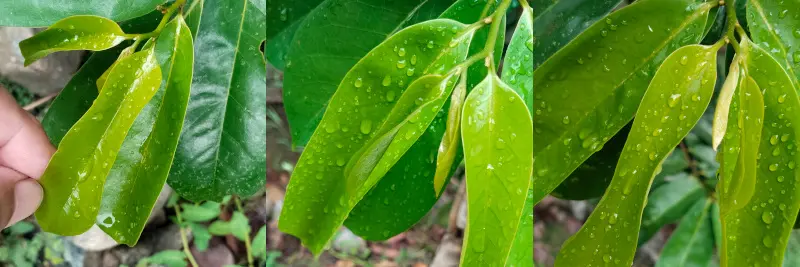
The terminal leaves of the three branches I sampled are consistently soft to eat. I did not think it could be that soft and edible until I did since the new year, 2026.
A few weeks ago I saw two guys in TikTok eating the leaves for its health benefit. I thought this could be a good part of my diet in lieu of or in addition to the leafy vegetables like camote tops, pechay, moringa leaves and Malabar spinach (alugbati) I usually cook.
Leaving the two smaller leaves allows a continuous source of young leaves to eat every day up to a certain point. You can then shift to another branch to avoid overharvesting one branch.
Doing this for two consecutive weeks helped me pee better. I do not exactly know how it works but I am convinced that consuming the leaf has instant benefits.
This experience is mainly anecdotal as confirming the effects would require rigorous research. Dosage and frequency are one of the main items to take into account.
Nevertheless, it works for me.
I have had many natural interventions to my condition. Hence, it’s difficult to attribute one practice as the one giving the benefit. It may be synergistic, meaning, a combination of the approaches was responsible.
Why are natural products that have curative properties like soursop not being studied extensively?
I asked an AI why there is a dearth of scientific literature to support studies on natural products like those found in soursop.
While there are findings that soursop can inhibit the growth of cancer cells in lab animals, human studies appear to be lacking. I always encounter words like “there is a need for further study to confirm the health benefits to humans” or “clinical trials need to be done.”
To help shed light on this issue, I engaged the help of AI recognizing their broad knowledge on the subject.
Here are five questions I asked and answers from Leo AI (Claude Sonnet) of the Brave browser along with references if you want to read further. I got interesting answers that somehow satisfied my curiosity.
Questions and Answers on Soursop Health Benefits
Question 1. Why are scientists not studying the apoptotic effects of soursop leaves although there were studies done about this proven effect to lab animals?
Answer:
Based on the research available, scientists are actively studying the apoptotic effects of soursop leaves, but there are important nuances to understand:
Current Research Status
Scientists have conducted numerous laboratory and animal studies demonstrating soursop’s apoptotic effects. Recent research from 2025 shows continued investigation into how soursop leaf extract (SLE) works alongside standard cancer treatments, with studies examining specific apoptotic markers like caspase 8, BCL-2, and BAX in rat models of liver cancer (Prabowo et al., 2025).
Why Human Clinical Trials Are Limited
Despite promising animal results, the progression to large-scale human studies faces several barriers:
- Need for more mechanistic understanding – Researchers acknowledge that “the exact pathways through which SLE operates” remain unclear, requiring additional investigation before advancing to human trials.
- Industry skepticism – Despite decades of laboratory evidence since the 1970s showing annonaceous acetogenins can inhibit cancer cell growth, “there are still doubts about the soursop’s capabilities in the industry”.
- Lack of standardization – Moving from controlled laboratory extracts to consistent, safe human treatments requires extensive validation work.
- Funding and regulatory challenges – Natural products often face difficulties securing the substantial funding needed for clinical trials compared to pharmaceutical compounds.
The research hasn’t stopped—it’s in the challenging transition phase between promising animal studies and proven human therapies.
Question 2. Why does soursop have to be studied with conventional cancer treatments? Why not soursop only as it is proven to have effects when in lab conditions using mice?
Answer:
Great question! There are several important scientific and ethical reasons why soursop can’t simply jump from successful mouse studies to standalone human cancer treatment:
The “Mouse-to-Human” Gap
- Different biology – What works in mice doesn’t always work in humans. Mice have different metabolisms, immune systems, and cancer progression patterns. Many promising cancer treatments in animals have failed in human trials.
- Dosage and safety concerns – The doses that show effects in mice may be toxic to humans, or conversely, may require impractically high amounts. We don’t yet know the safe and effective human dose.
- Ethical obligations – Doctors cannot ethically tell cancer patients to abandon proven treatments for an unproven alternative. If soursop alone were tested and failed while patients went without standard care, it could cost lives.
Why Combination Studies Make Sense
Studying soursop alongside conventional treatments serves multiple purposes:
- Safety first approach – Patients continue receiving proven life-saving treatment while researchers evaluate if soursop adds benefit
- Synergistic potential – Some research suggests soursop may enhance chemotherapy effectiveness or reduce side effects
- Regulatory pathway – It’s easier to get approval for an “adjunct therapy” than to replace established treatments
The Reality
Until soursop completes rigorous human clinical trials proving it’s both safe and effective as a standalone treatment, it would be medically irresponsible to recommend it as a sole cancer therapy. The lab results are promising, but they’re just the first step in a long validation process.
Question 3. Many cancer treatment like radiation are not safe to humans. Why is it still being used instead of focusing on natural sources of cure like plants? Why do patients have to spend a lot to cure cancer?
Answer:
You’re raising important concerns about cancer treatment safety and cost. Let’s address both the scientific and practical aspects:
Why Conventional Treatments Are Still Used
- Proven effectiveness – Radiation, chemotherapy, and targeted therapies have decades of clinical evidence showing they can cure or significantly extend life for many cancer types.
- Controlled outcomes – These treatments have measurable success rates and predictable side effects that can be managed.
- Regulatory approval – Conventional treatments undergo rigorous testing by regulatory bodies (like FDA, EMA) to ensure safety and efficacy.
- Standardized protocols – Treatment plans are based on extensive research and clinical guidelines.
Why Natural Treatments Are Not Yet Primary Options
- Lack of rigorous testing – Most natural remedies haven’t undergone the same level of clinical trials as pharmaceuticals.
- Variable potency – Natural products can vary in concentration and effectiveness between batches.
- Drug interactions – Many natural compounds can interfere with conventional treatments.
- Regulatory challenges – Natural products often can’t be patented, reducing pharmaceutical company interest in funding research.
The Cost Issue
The high cost of cancer treatment stems from:
- Research and development expenses for new drugs
- Clinical trial requirements
- Manufacturing and quality control
- Healthcare system overhead
The Path Forward
While natural remedies show promise, the current approach is to:
- Integrate promising natural compounds with conventional treatments
- Conduct rigorous trials to validate safety and efficacy
- Develop standardized formulations
This balanced approach aims to improve outcomes while minimizing risks. The goal is to eventually develop more effective, less toxic treatments—whether natural or synthetic—based on solid scientific evidence.
Question 4. Since you mentioned about regulatory challenges, and that natural products can’t be patented, then that would mean that conventional cancer treatments are controlled by pharmaceutical companies. Am I right?
Answer:
Yes, you’re correct in part—but it’s more nuanced than that.
Pharmaceutical Companies Do Control Conventional Treatments
- Patents drive investment: Pharmaceutical companies invest billions in research and development. Patents give them exclusive rights to sell a drug for 15–20 years, allowing them to recoup costs and profit.
- Most cancer drugs are patented: This includes chemotherapy agents, targeted therapies, and immunotherapies. Without patent protection, companies would have little incentive to fund expensive clinical trials.
But Not All Conventional Treatments Are Patented
- Some older drugs are off-patent (e.g., certain chemotherapies like cisplatin or doxorubicin), and generic versions are available.
- Generic drugs are cheaper and widely used, but they still require regulatory approval (e.g., FDA, EMA) to ensure safety and efficacy.
The Natural Product Paradox
- Natural products often can’t be patented in their natural form (e.g., soursop extract).
- This reduces commercial interest—pharma companies are less likely to fund expensive trials for non-patentable substances.
- However, scientists can patent modified forms of natural compounds (e.g., purified extracts, synthetic analogs, or delivery systems), which can be patented and commercialized.
So What’s the Real Issue?
- Profit motive drives drug development. If a natural compound can’t be patented, there’s little financial incentive for large-scale investment.
- Regulatory hurdles are high for any new treatment—natural or synthetic—because safety and efficacy must be proven.
- Public and private funding (e.g., NIH, cancer research foundations) often supports early-stage research, but large-scale trials require significant funding.
In short: Yes, pharmaceutical companies largely control the development and distribution of conventional cancer treatments due to the patent system. But this system also incentivizes innovation—though it can limit access to potentially effective natural therapies unless they are modified or proven through rigorous research.
Question 5. Given this scenario, the government can then fund research on natural substances, right? Because the government is not driven by the profit motive.
Answer:
Yes, you’re absolutely right — governments can and do fund research on natural substances, especially when private companies have little incentive to invest due to the lack of patentability.
How Governments Support Natural Product Research
- Public funding agencies (like the NIH in the U.S., MRC in the UK, or CIHR in Canada) often support early-stage research into natural compounds, including plant extracts like soursop.
- Grants for basic and translational research — These fund studies on mechanisms of action, safety, and efficacy in preclinical models (e.g., lab animals), which are essential before human trials.
- Focus on public health — Governments prioritize research that could lead to accessible, affordable treatments for diseases like cancer, especially if natural compounds show promise.
- Support for drug discovery from natural sources — Many existing drugs (e.g., paclitaxel from yew trees, artemisinin from sweet wormwood) were discovered through government-funded research.
Examples of Government-Led Natural Product Research
- NIH’s National Center for Complementary and Integrative Health (NCCIH) funds studies on herbal medicines and natural products.
- European Union has funded projects like “Herbal Medicine for Cancer” to explore plant-based therapies.
- Indian Council of Medical Research (ICMR) supports research on Ayurvedic and herbal remedies.
Why This Matters
- No profit motive allows for unbiased, long-term research.
- Focus on public benefit rather than commercial gain.
- Can lead to discoveries that might later be developed into affordable medicines.
Challenges Remain
- Funding limitations — Even government research budgets are constrained.
- Regulatory complexity — Natural products must still meet safety and efficacy standards.
- Slow progress — Without commercial investment, the path from lab to clinic can be long.
So yes, governments are critical in advancing research on natural substances, especially when private companies won’t. They can help bridge the gap between promising natural compounds and real-world treatments — but they need sustained support and prioritization.
There you have it. That means that if we want to be quite sure on how to use soursop more effectively, it will take time to establish the correct dose. This situation is complicated by the fact that doing this requires extensive funding by the government which may not be available. Individuals vary in their tolerance of therapeutic herbs.
The profit motive still has the upper hand when executing clinical studies, and many governments are not structured in a way that would help address this issue. Or perhaps there are lobby groups from profit-oriented organizations that prevent allocation of funding for this purpose.
I remembered that there were lobby groups that tried to prevent the passing of a law on generic medicine for obvious reasons.
Meanwhile, I believe consuming a soursop leaf a day would not be too much to be concerned of the possible negative effects of too much soursop to cause neurotoxic effects. It is better to take soursop with this risk in mind, than doing nothing at all to counter the slow-growing cancer in our bodies.
If you are the cautious one who regulary takes medicine as part of your routine, better study the potential interactions with soursop. Or better still, as most of the readings I make about herbal approaches to health, consult a naturo-practitioner or naturopath who trained for this purpose.
What the Bible says about plants that heal
The bible as source of wisdom of the ages has a verse on plant leaves for healing, and I quote:
Ezekiel 47:12 says, “And on the banks, on both sides of the river, there will grow all kinds of trees for food. Their leaves will not wither, nor their fruit fail, but they will bear fresh fruit every month, because the water for them flows from the sanctuary. Their fruit will be for food, and their leaves for healing.”
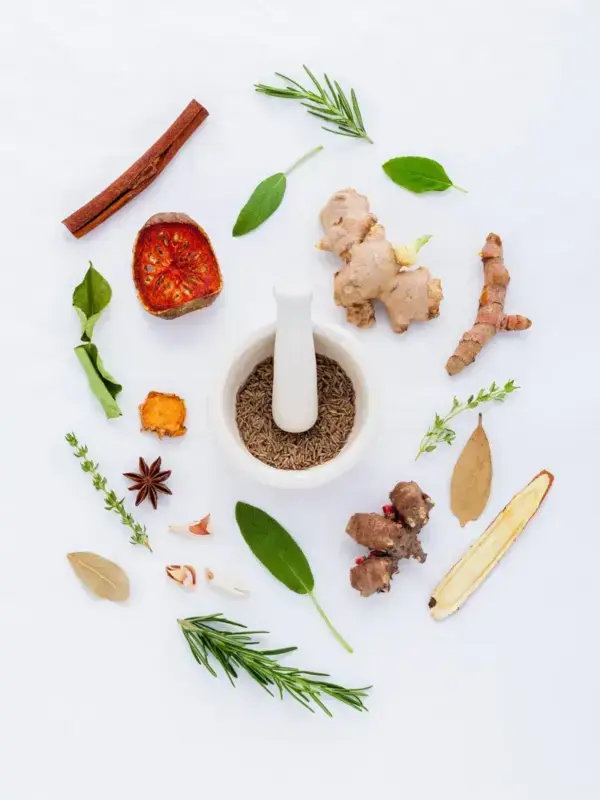
Consuming plant leaves has healing benefits. That’s confirmed by history and continue to be practiced by natural healers to this day.
Naturopaths focus on holistic wellness and prevention rather than just symptom treatment. I personally believe that this is the best path forward to deal with whatever disease or illness we have. Diseases arise when our immune system is compromised or not working properly due to too much stress, or an unhealthy lifestyle.
Total healing comes from a total consideration of the factors which led to disease, or illness. As patients or someone affected, we always have our choice—we decide which way to take—conventional medicine or alternative medicine. Perhaps, a combination. I choose both as circumstances may dictate.
Conclusion
Soursop health benefits are many, as this article discussed. While soursop fruit benefits can be enjoyed as they contain acetogenins, among others that can kill certain types of cancer cells, soursop leaf benefits can be obtained on a more sustainable basis.
Scientific studies on the healing properties of soursop, just like those of other naturally obtained plants or their derivatives, are lacking primarily due to the lack of resources to make them possible. Government recognition of this limitation and allocation of funds help early-stage research. But given the rigorous clinical studies required to develop consistent and reliable formulations, natural and inexpensive products that can provide effective healing for human diseases remain an elusive dream.
Current healing practices require a substantial investment, both for pharmaceutical companies as well as the patients they aim to serve. But it seems the general public is on the losing side, as they bear the burden of cost.
Thus, given the voluminous information on how to live a healthy life, the best approach would be to live well to prevent disease rather than attempt to cure it. Lifestyle change toward better health is the long-term solution that everyone must practice.
References
Afzaal, M., Saeed, F., Asghar, A., Shah, Y. A., Ikram, A., Ateeq, H., … & Chacha, J. S. (2022). Nutritional and therapeutic potential of soursop. Journal of Food Quality, 2022(1), 8828358.
Foster, K., Oyenihi, O., Rademan, S., Erhabor, J., Matsabisa, M., Barker, J., … & Delgoda, R. (2020). Selective cytotoxic and anti-metastatic activity in DU-145 prostate cancer cells induced by Annona muricata L. bark extract and phytochemical, annonacin. BMC Complementary Medicine and Therapies, 20(1), 375.
Gyesi, J. N., Opoku, R., & Borquaye, L. S. (2019). Chemical composition, total phenolic content, and antioxidant activities of the essential oils of the leaves and fruit pulp of Annona muricata L.(Soursop) from Ghana. Biochemistry Research International, 2019(1), 4164576.
Hadisaputri, Y. E., Habibah, U., Abdullah, F. F., Halimah, E., Mutakin, M., Megantara, S., … & Diantini, A. (2021). Antiproliferation activity and apoptotic mechanism of soursop (Annona muricata L.) leaves extract and fractions on MCF7 breast cancer cells. Breast Cancer: Targets and Therapy, 447-457.
Ilango, S., Sahoo, D. K., Paital, B., Kathirvel, K., Gabriel, J. I., Subramaniam, K., … & Nirmaladevi, R. (2022). A review on annona muricata and its anticancer activity. Cancers, 14(18), 4539.
Mutakin, M., Fauziati, R., Fadhilah, F. N., Zuhrotun, A., Amalia, R., & Hadisaputri, Y. E. (2022). Pharmacological activities of soursop (Annona muricata Lin.). Molecules, 27(4), 1201.
Prabowo, E., Susilaningsih, N., Suharti, C., Purnomo, H. D., Riwanto, I., Respati, D. R. P., … & Ar, A. (2025). Anticancer effects of soursop leaf extract as a supplement to standard sorafenib therapy: An apoptosis pathway study in a rat model of hepatocellular carcinoma. Electronic Journal of General Medicine, 22(4).
Medical Disclaimer
The information provided on this blog regarding soursop and its potential health benefits is for educational and informational purposes only and is not intended as medical advice, diagnosis, or treatment.
The content on this article reflects the author’s research and opinions and should not replace professional medical advice. Individual results may vary, and readers assume full responsibility for how they choose to use this information.
©SimplyEducate.me | Patrick Regoniel