
What is the circular economy model, and why are leading companies worldwide adopting it as their blueprint for sustainable growth? This revolutionary approach eliminates waste while boosting profits—transforming how businesses operate in the 21st century.
To understand how this game-changing model works, let’s start with the fundamentals of economic systems.
Table of Contents
What is an economic model?
An economic model is a simplified representation of reality, using variables, assumptions, and graphical tools like graphs, bar and pie charts to analyze, predict, and analyze complex economic behaviors and phenomena.
The model can help economists and other likeminded individuals gain insights on how factors, prices, or policies (usually government) interact to influence outcomes.
The economy is composed of complex systems. Hence, the model simplifies the interactions between parts particularly those that relate to production and consumption, or supply and demand.
The core components of an economic model are production, consumption, and resource allocation.
1. Production
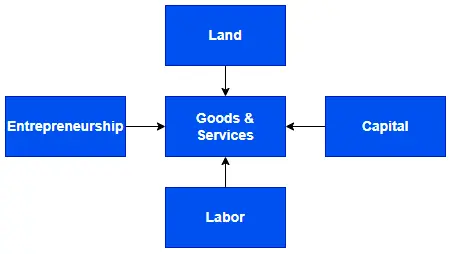
Production involves the creation of goods and services using factors like labor, capital, land, and entrepreneurship. The production function shows how these inputs are transformed into outputs, with technology and efficiency determining productivity levels. Producers make supply decisions based on costs, prices, and potential profits.
We can represent production in an economy using a diagram:
2. Consumption
Consumption represents how individuals and households use goods and services to satisfy their needs and wants. Consumers face budget constraints based on their income and must make choices about what to buy. Their preferences and the prices they face determine demand, showing how much they’re willing to purchase at different price points.
3. Resource Allocation
Resource allocation is the process of distributing limited resources among competing uses. Since resources are scarce, every choice involves an opportunity cost—the value of what must be given up.
Markets use price signals to coordinate allocation, guiding resources toward their most valued uses while balancing efficiency and equity concerns
Now, let’s proceed to details on the circular economy as an example of an economic model.
Circular Economy: An Example of an Economic Model
What is the Circular Economy Model and why is it a desirable guide towards sustainability?
The Circular Economy Model promotes sustainability by fundamentally redesigning how we produce and consume, moving away from the traditional “take-make-dispose” linear approach. The “take-make-dispose” linear approach describes a traditional economic model where raw materials are extracted from nature, manufactured into products, used by consumers, and then discarded as waste, creating a one-way flow that depletes resources and generates pollution without recovering value from end-of-life products.
Instead of extracting resources, using them once, and discarding them as waste, the Circular Economy Model advocates to keep materials in use for as long as possible through reuse, repair, refurbishment, and recycling. This dramatically reduces resource depletion and minimizes environmental damage from extraction and waste.
The environmental benefits of adhering to the circular economy model and its principles are substantial. The model reduces greenhouse gas emissions by cutting down on energy-intensive extraction and manufacturing of virgin materials. This approach decreases pollution and waste sent to landfills or incinerators, while protecting ecosystems from degradation caused by mining, logging, and other extractive activities.
By designing products for longevity and recyclability from the start, it prevents waste before it’s created.
The economic advantages to be gained from the Circular Economy Model make it attractive beyond just environmental concerns. Businesses can reduce costs by using materials more efficiently and creating new revenue streams through repair services, remanufacturing, and material recovery. It drives innovation in product design, business models, and technologies.
The circular economy also creates jobs in repair, refurbishment, and recycling sectors while reducing dependence on volatile commodity markets and imported raw materials.
Long-term resilience is perhaps its most compelling feature. As global populations grow and resources become scarcer, a circular approach ensures we can meet current needs without compromising future generations’ ability to meet theirs—the essence of sustainability. It builds economic systems that work within planetary boundaries rather than against them.
Circular Economy Background and Main Goal
The Circular Economy is a contemporary application and synthesis of various concepts and schools of thought that have evolved over decades, or even centuries. The specific term “circular economy” gained prominence in policy and academic discussions in the late 1980s and was later popularized by modern think tanks.
The main goal of the Circular Economy is to eliminate waste and pollution. Waste and pollution are eliminated by rethinking how products are designed, used, and disposed of—shifting from a linear to a closed-loop system.
Three Key Strategies
Eliminating waste and pollution is achieved through three key strategies namely,
- design for longetivity and reuse,
- circulate products and materials, and
- regenerate nature.
1. Design for Longevity and Reuse
By using durable materials and modular designs, items remain functional for longer thus minimizing waste.
For example, electronics designed with replaceable components can be repaired instead of discarded.
I did this approach when the integrated circuits of my LG washing machine short-circuited because a small gecko lived and laid eggs inside the control panel. LG designed the system in a modular manner so the appliance repair company was able to order the correct part.
I had the integrated circuit part replaced and got my washing machine working again. Instead of buying a new washing machine, I spent a fraction for the repair. It just takes some technician’s skill to troubleshoot the problem and time to wait for the part to arrive.

Redesigning Systems to Prevent Pollution
The model promotes clean production processes that avoid toxic chemicals and emissions. It encourages the use of renewable energy and safe, non-toxic materials. By eliminating hazardous substances and designing for safe disassembly, pollution is prevented at the source.
Ultimately, the circular economy treats waste as a design flaw rather than an inevitable outcome. By keeping materials in use and ensuring they are safely returned to the environment or reused in industry, pollution is avoided and natural systems are preserved.
Here’s an illustrative example:
Patagonia’s Worn Wear Program demonstrates these circular economy principles in action. The outdoor clothing company designs its garments using non-toxic dyes and recycled materials (clean production), powers its facilities with renewable energy (clean energy use), and creates products that can be easily repaired and disassembled (safe design).
When customers return worn items, Patagonia repairs and resells them, or breaks them down into fibers to create new products—keeping materials in continuous use without generating textile waste that would pollute landfills or require toxic chemical processing.
This approach eliminates the “design flaw” of disposability by ensuring that what would traditionally be “waste” becomes a valuable resource, preventing pollution at every stage while preserving natural resources.
2. Circulate products and materials
At the end of a product’s life, materials are recovered and reintroduced into the production cycle. This includes both technical cycles (recycling metals, plastics, and electronics) and biological cycles (composting organic waste to return nutrients to the soil). This keeps materials in use and prevents them from becoming pollution.
Here’s a concrete example:
Interface carpet tiles exemplify both technical and biological cycles in practice. The company’s ReEntry program collects old carpet tiles from commercial buildings and separates them into their component materials—the nylon fibers are chemically recycled back into new carpet backing (technical cycle), while the calcium carbonate backing material is recovered for reuse in manufacturing.
Additionally, Interface has developed carpet tiles with bio-based backing made from plant materials that can be safely composted at end-of-life, returning nutrients to soil (biological cycle). Through this system, over 90% of the material from old carpets is diverted from landfills and reintroduced into production, transforming what was once considered waste into a continuous resource loop that eliminates pollution and resource depletion.
3. Regenerate nature
Regenerating nature means transitioning to renewable inputs and restoring natural capital.
The regenerate nature principle of the circular economy means shifting from a model that depletes natural resources to one that actively restores and enhances natural systems. This involves treating nature not as a source to be exploited, but as a living system that can be regenerated through sustainable practices. It aims to build natural capital by improving soil health, increasing biodiversity, and restoring ecosystems.
This can be achieved by adopting regenerative practices across industries, particularly in food production.
For example, regenerative agriculture—such as agroecology, conservation agriculture, and agroforestry—improves soil health, increases carbon sequestration, and supports biodiversity. These methods reduce reliance on synthetic fertilizers and pesticides, allowing pollinators and soil microbes to thrive.
Here’s a detailed example illustrating regenerative agriculture in practice:
Rodale Institute’s Farming Systems Trial (FST)—a 30+ year study comparing conventional, organic, and regenerative farming—demonstrates the tangible benefits of regenerative practices.
In this trial, regenerative systems (using cover crops, crop rotation, reduced tillage, and composted organic matter) improved soil organic carbon by 26% over conventional systems, while also increasing soil water-holding capacity by 20% and reducing nitrogen leaching by 40%.
The system employs agroecological principles like intercropping legumes to fix nitrogen naturally, conservation agriculture through no-till planting to preserve soil structure, and agroforestry by integrating trees into crop fields to provide shade, reduce erosion, and support pollinators.
These practices eliminate synthetic fertilizers and pesticides, allowing soil microbial diversity to increase by 50% and beneficial insects like bees and predatory wasps to thrive.
As a result, the farm achieves higher yields during droughts due to improved soil health, and the carbon sequestration rate of 1.2 tons per acre per year contributes to climate change mitigation.
This holistic approach not only produces food but actively restores ecosystem health, turning farmland into a carbon sink and biodiversity hotspot.
By keeping materials in use and reducing extraction, land can be returned to nature, enabling rewilding and ecosystem recovery.
Business Innovation: Ways to Operationalize the Circular Economy Model
Design as the First Step
The importance of “designing for circularity” (durability, modularity, repairability, ease of disassembly).
“Designing for circularity” means intentionally creating products that are durable, modular, repairable, and easy to disassemble—so they can be reused, repaired, or recycled at the end of their life, minimizing waste and resource depletion. This approach shifts the focus from disposable products to long-lasting, restorative systems.
Example: Fairphone
Fairphone designs smartphones with circularity in mind. Their devices are built with modular components—such as the battery, camera, and screen—that can be easily replaced by users or technicians. The phone uses screw-based assembly instead of adhesives, making disassembly simple. It is designed for longevity with a 3-year software update promise and a 5-year hardware lifespan.
The materials are sourced responsibly, and the device is repairable with clear instructions and available spare parts.
When the phone reaches end-of-life, its components can be recovered and reused in new devices.
This design reduces e-waste, conserves raw materials, and keeps valuable resources in the economy—demonstrating how circular design principles operationalize the circular economy model.
Innovative Business Models: The R-Framework
The Inner Loops
The 5R hierarchy (Rethink, Refuse, Reduce, Reuse, Repair) represents the most resource-efficient strategies in the circular economy because they retain maximum value and energy by keeping products in use longer or avoiding unnecessary production altogether—rather than relying on energy-intensive recycling or disposal.
Example: Patagonia’s “Don’t Buy This Jacket” Campaign

Dirtbag Billionaire
How Yvon Chouinard Built Patagonia, Made a Fortune, and Gave It All Away
Disclosure: As an Amazon Associate, I earn from qualifying purchases.
Patagonia exemplifies these 5R strategies through its business model.
- Rethink: The company challenges consumers to reconsider whether they truly need new products, promoting conscious consumption.
- Refuse: They encourage customers to refuse unnecessary purchases through their provocative advertising.
- Reduce: Patagonia minimizes material use by creating high-quality, long-lasting garments that reduce the need for frequent replacements.
- Reuse: Their Worn Wear platform sells used Patagonia gear, extending product lifespans and keeping items in circulation.
- Repair: They offer free repair services, provide DIY repair guides, and tour with mobile repair trucks to fix damaged clothing.
By prioritizing these strategies, Patagonia retains the embodied energy and resources already invested in manufacturing—repairing a jacket requires far less energy than recycling its materials or producing a new one. This approach maximizes value retention while minimizing environmental impact, demonstrating how the 5R hierarchy operationalizes circular economy principles at the business model level.
The Outer Loops
The 4R strategies (Remanufacture, Refurbish, Recycle, Recover) represent “outer loop” circular economy approaches that recover material value when products can no longer be reused or repaired in their original form—though they require more energy and processing than inner loop strategies, they still prevent waste and resource depletion.
Example: Caterpillar’s Remanufacturing Program (Cat Reman)
Caterpillar demonstrates all four outer-loop strategies through its comprehensive remanufacturing system.
- Remanufacture: Cat Reman collects used engines, transmissions, and hydraulic components from construction equipment, disassembles them completely, replaces worn parts, and rebuilds them to “like-new” specifications—retaining 85% of original materials while using 60% less energy than new production.
- Refurbish: Components that don’t require full remanufacturing are cleaned, tested, and upgraded with new software or minor part replacements to extend their service life.
- Recycle: Materials that cannot be remanufactured (damaged metal casings, worn gears) are sorted and sent to metal recyclers to recover steel, aluminum, and copper for new manufacturing.
- Recover: Even lubricants and fluids are collected and processed to extract residual value or safely return them to industrial use.
This system has remanufactured over 8 million components, saving 300 million pounds of material from landfills annually while providing customers with products at 40-70% the cost of new equipment—demonstrating how outer-loop strategies capture value even when inner loops are exhausted.
Product-as-a-Service & Sharing Economy Platforms
Shifting from ownership to access models transforms the traditional “buy-own-dispose” paradigm by allowing customers to pay for the use or performance of products rather than owning them outright—this incentivizes manufacturers to design durable, maintainable products since they retain ownership and responsibility throughout the product lifecycle.
Example: Philips Lighting-as-a-Service at Schiphol Airport
Philips (now Signify) implemented a circular business model at Amsterdam’s Schiphol Airport where, instead of selling light fixtures, they provide “lighting-as-a-service.”
The airport pays for the lighting performance (lumens delivered) rather than purchasing the equipment. Philips retains ownership of all LED fixtures, handles installation, maintenance, upgrades, and eventual take-back.
This model incentivizes Philips to design ultra-durable, energy-efficient lights that last 75,000+ hours and can be easily serviced, since they bear the costs of failures and replacements.
When fixtures reach end-of-life, Philips recovers and remanufactures components or recycles materials back into new products.
The airport benefits from reduced energy costs (50% savings), guaranteed lighting quality, and zero capital expenditure, while Philips maintains a continuous revenue stream and keeps valuable materials in circulation.
This access-over-ownership model aligns economic incentives with environmental outcomes—profitability depends on longevity and resource efficiency rather than planned obsolescence.
Implementation and Impact: Roles and Responsibilities
The Role of Governance at National, Regional, and Local Levels
1. Planning and Policy
Government support for circular economy can be implemented across three levels.
At the national level, governments can enact extended producer responsibility (EPR) laws requiring manufacturers to take back and recycle products like electronics, packaging, and textiles; implement fiscal policies such as tax incentives for repair services and recycled products, landfill taxes, and green public procurement mandates; and establish regulatory frameworks including right-to-repair legislation, eco-design standards, and bans on planned obsolescence.
At the regional/state level, authorities can develop infrastructure like material recovery facilities and industrial symbiosis parks where companies exchange waste as resources; provide business support through circular economy grants and innovation clusters; fund skills training for repair and remanufacturing; and implement regional procurement policies favoring recycled materials in construction and leasing models for vehicle fleets.
At the local/municipal level, governments can establish waste management systems with pay-as-you-throw schemes and separate collection streams for different materials; create community programs like repair cafés, tool libraries, and composting initiatives; implement circular construction requirements with material passports for buildings; partner with businesses to redistribute surplus food; and run education campaigns in schools and communities.
The most effective approach requires policy coherence across all levels—for example, national EPR laws for textiles combined with regional sorting facilities and local collection points create a complete circular system.
2. Industrial Parks and Infrastructures
Governments can also invest on industrial symbiosis parks where companies exchange waste streams as resources, repair and refurbishment hubs, and composting and biogas facilities for organic waste processing.
These investments address the fact that infrastructure consumes 60% of the world’s materials and is responsible for up to 79% of global greenhouse gases, making circular infrastructure critical for decarbonization.
Digital infrastructure is equally important to facilitate information sharing, resource tracking, and material passports that document building components for future reuse.
Governments should also invest in logistics networks for reverse supply chains, including collection points and transportation systems for product take-back schemes and waste-to-resource flows.
Social infrastructure investments include community repair centers, tool libraries, educational facilities for circular economy skills training, and innovation hubs connecting businesses, researchers, and investors in circular solutions.
3. Blended Finance Models
Blended finance models combining public grants, concessional loans, and private capital can help overcome the challenge that circular infrastructure often requires long-term, community-oriented investments that don’t align with traditional short-term, high-yield financial mechanisms.
Governments can also use green bonds and sustainability-linked loans as capital sources, though eligibility criteria may need adjustment to capture unique circular project characteristics. Through taxation systems, subsidies, and procurement policies that incentivize waste reduction and circular design, governments can create the enabling environment necessary for circular infrastructure to flourish
The Role of Professionals and Academia
Research and Development
Professionals and academia play a pivotal role in advancing the circular economy by driving innovation in sustainable materials and processes—the foundation of a regenerative system.
In materials development, researchers and industry experts are creating alternatives to virgin resources, such as bioplastics from agricultural waste, bio-based composites, and recycled polymers with enhanced performance. They are also designing materials for end-of-life recyclability, using modular designs, non-toxic adhesives, and easily separable components.
For example, academia is exploring lignin-based materials as replacements for petroleum-derived plastics (Jiju et al., 2025), while professionals in materials science are developing metal alloys that can be infinitely recycled without quality loss although this remains a challenge due to scientific bottlenecks, among others (Raabe, 2023).
In process innovation, professionals and researchers are reimagining manufacturing systems to minimize waste and energy use. This includes developing closed-loop production cycles, where waste from one process becomes input for another—such as using textile waste to create new fibers or converting food waste into bioplastics.
Academia contributes through life cycle assessments (LCAs) that identify the most sustainable material and process pathways, while engineers design circular production systems using digital twins and AI to optimize resource flows.
Ultimately, the role of professionals and academia is to rethink the very design of materials and processes—not just to make them less harmful, but to make them inherently regenerative. By prioritizing circular design principles (such as durability, repairability, and recyclability), they help shift the economy from “take-make-dispose” to “use-reuse-recycle,” laying the groundwork for a sustainable future.
Education
Integrating circular principles into engineering, business, and design curricula is essential to build a workforce capable of driving the circular economy.
In engineering, students learn to design for durability, disassembly, and recyclability, using tools like life cycle assessment to minimize environmental impact.
Business education emphasizes circular models such as product-as-a-service and remanufacturing, helping students understand how sustainability can drive profitability.
These educational shifts equip future professionals with the skills to innovate across sectors, turning circularity from a concept into a practical, scalable reality.
The Role of Individuals
Conscious Consumption
Prioritizing durability, secondhand markets, and avoiding single-use items are key actions that individuals and businesses can take to support a circular economy.
By choosing products built to last, consumers reduce the demand for new materials and minimize waste, while businesses can design and market durable goods that withstand long-term use.
Active Participation
Utilizing repair services extends product lifespans, reduces waste, and supports sustainable consumption, while effective waste separation ensures materials are recovered and reused in the circular economy.
Product-as-a-service models shift responsibility to producers, encouraging durable design and efficient resource use, helping keep materials in use longer.
Conclusion
The shift from a linear, extractive economy to a regenerative circular model is not just a choice—it’s essential for a sustainable future. As the impacts of resource depletion and climate change become increasingly evident, urgent, cross-sector collaboration is critical to drive meaningful change.
The circular economy provides a clear, actionable blueprint for building a prosperous, resilient future that respects planetary boundaries. This transition is not limited to governments or businesses—it begins with every individual, organization, and community making conscious choices to reduce waste, reuse resources, and support sustainable systems.
Together, we can turn the vision of a circular world into reality, starting now.
References
Jiju, P. S., Singhania, R. R., Shruthy, N. S., Shalu, S., Dong, C. D., & Patel, A. K. (2025). Lignin-derived biomaterials for environmental application: Advancements in sustainable leather and bioplastic production: A review. International Journal of Biological Macromolecules, 146887.
Raabe, D. (2023). The materials science behind sustainable metals and alloys. Chemical Reviews, 123(5), 2436-2608.
Web Resources
- https://www.gihub.org/infrastructure-and-the-circular-economy/
- https://www.gihub.org/infrastructure-and-the-circular-economy/
- https://www.cutter.com/article/investment-opportunities-sustainable-circular-economy-opening-statement
- https://energy.sustainability-directory.com/
- https://www.gihub.org/infrastructure-and-the-circular-economy/circular-infrastructure-pathways/
FAQ: The Circular Economy: A Blueprint for Sustainable Economic Systems
Q1. What is an economic model?
An economic model describes how goods and services are produced, consumed, and allocated within a society. It includes three core components: production (how goods are made), consumption (how they are used), and resource allocation (how inputs like labor, capital, and materials are distributed).
Q2. What is the Circular Economy Model and why is it a desirable guide towards sustainability?
The Circular Economy is an economic model designed to promote sustainability by keeping resources in use for as long as possible. Its main goal is to eliminate waste and pollution, circulate products and materials, and regenerate natural systems. This model is desirable because it reduces environmental degradation, supports long-term resource security, and fosters innovation.
Q3. What are the three key strategies of the Circular Economy?
- Design for Longevity and Reuse: Products are built to last, be repaired, and reused, reducing the need for new materials.
- Circulate Products and Materials: Materials are recovered and reused through recycling, remanufacturing, and refurbishment.
- Regenerate Nature: Natural systems are restored and enhanced through sustainable practices and regenerative design.
Q4. How can businesses operationalize the Circular Economy?
Businesses can adopt circular strategies through innovative design and business models. For example, Fairphone designs modular smartphones that are easy to repair and upgrade. The R-Framework—Reimagine, Reuse, Recycle—helps companies rethink product lifecycles. Inner loops include repair and reuse (e.g., Patagonia’s “Don’t Buy This Jacket” campaign), while outer loops involve remanufacturing (e.g., Caterpillar’s Cat Reman program). Product-as-a-Service models, like Philips’ Lighting-as-a-Service at Schiphol Airport, allow companies to retain ownership and ensure responsible end-of-life management.
Q5. What role does governance play in implementing the Circular Economy?
Governments at national, regional, and local levels are critical to enabling circular systems. National policies include extended producer responsibility laws and green procurement. Regional efforts focus on industrial parks and infrastructure for material recovery. Blended finance models—combining public grants, loans, and private investment—help fund circular projects.
Q6. What is the role of professionals and academia?
Professionals and academia drive innovation through research and development of sustainable materials and processes. They also integrate circular principles into engineering, business, and design curricula, ensuring future leaders are equipped to design and manage circular systems.
Q7. What can individuals do to support the Circular Economy?
Individuals can support circularity by choosing durable products, using repair services, buying secondhand, avoiding single-use items, and engaging with product-as-a-service models. Conscious consumption and active participation in reuse and recycling systems help close the loop and reduce environmental impact.