
Updated: November 23, 2025
Do spiders eat cockroaches?
Cockroaches are unwanted organisms in the house. Do you know that spiders can help you get rid of them? Here’s evidence that spiders do eat cockroaches.
Table of Contents
Do Spiders Eat Cockroaches? A Surprising Early Morning Discovery
Seeing a large spider preying on a cockroach is fascinating. I had never witnessed such remarkable predation until just this morning.
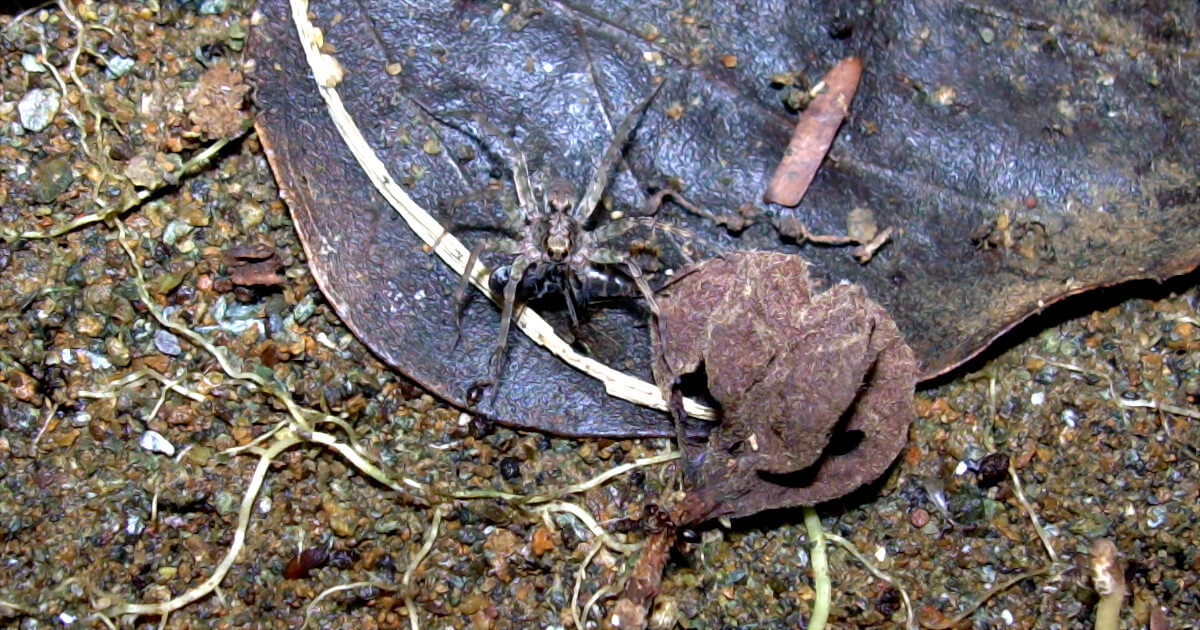
At around 4:30 a.m., as I prepared to start my day and picked up my shoulder bag to head to my favorite writing spot, I noticed something unusual on the side of the bag. There it was—a large huntsman spider gripping a cockroach, or what was left of it after some parts had been consumed. The spider’s body measured about 1.5 cm long, with legs stretching roughly 9 cm across. The cockroach’s head was completely detached, suggesting that the spider knew exactly where to strike.
I always keep my camera in my bag—a habit developed over years of photographing wildlife at the right moment. Carefully, I reached for my camera, trying not to disturb the spider but moving quickly in case it bolted.
I snapped five close-up shots with flash and even captured a short video. Moments later, the spider leapt from the bag onto the table, then dropped three feet to the floor. It scurried under the table for a moment before darting into the dark corner by the refrigerator—still holding onto the cockroach. I couldn’t take any more shots after that. It was an instinctive survival response, and I had no intention of harming it.
A Documented Fact: Spiders Eat Cockroaches
What does this observation mean? For most people, this might just seem like another everyday scene. But for an inquisitive mind—or a researcher—it’s more than that.
It’s documented proof that spiders hunt and eat cockroaches. Now we can answer the question “Do spiders eat roaches?”
Why is this important? Observing and documenting this behavior spares future researchers from needing to prove that certain spiders do prey on cockroaches. Seeing a spider feed on a cockroach in the wild is rare unless you confine a spider in a glass tank, supply it with cockroaches, and wait hours (or days) to see if it eats. Even then, the spider might not feed under stressful captivity.
But as the photos shown earlier (the huntsman spider preying on an arthropod and the remains of a cockroach preyed upon by the spider) have substantiated that spiders do eat cockroaches. The common large spider found at home and the huntsman spiders are not dangerous to humans, though their intimidating appearance and large size can be frightening. Its bite is similar to a bee sting, but they do not have a neurotoxic venom that can be a medical concern. These spiders tend to rather escape than attack when disturbed.
Ecological Implications
Now that we know spiders prey on cockroaches, there’s an important takeaway. If you kill spiders indiscriminately, you might unintentionally increase the number of cockroaches in your home.
Cockroaches aren’t just unpleasant—they carry 33 types of bacteria (including E. coli and Salmonella) and several parasites (Parada, 2012).
Let’s see what these amazing arthropods can prevent from spreading to human dwellings.
Pathogens Associated with Cockroaches
Bacterial Pathogens and the Illnesses They Cause
Cockroaches—especially Blattella germanica and Periplaneta americana—act as reservoirs for multiple bacteria known to cause human disease, including:
- Salmonella spp. Salmonellosis (food poisoning) – nausea, vomiting, diarrhea, abdominal cramps, prolonged fever, weakness, rash, possible intestinal perforation
- Escherichia coli – diarrheal illnesses (traveler’s diarrhea, infantile diarrhea), kidney failure, urinary tract infections (UTIs), sepsis
- Staphylococcus aureus – skin and soft tissue infections, rapid-onset vomiting and diarrhea from pre-formed toxins in contaminated food, pneumonia, infection of heart valves
- Klebsiella pneumoniae – pneumonia, UTIs, sepsis, liver abscesses
- Pseudomonas aeruginosa – pneumonia, wound infections, UTIs, ear infection
- Enterobacter cloacae – hospital-acquired infections, UTIs, wound and surgical site infections, meningits
These bacteria can contaminate surfaces and food through mechanical transmission from cockroach exteriors and from their gut contents. Also, when you splat or squash cockroaches using your slippers or anything you can reach at hand, in effect, you are spreading pathogens in the surfaces where these are killed. After a while, ants come and likewise add to the mess.
Viral Pathogens
An exhaustive review of the potential role of cockroaches in carrying viruses, including Enteroviruses (e.g. polioviruses, echoviruses, coxsackieviruses). However, these studies are not extensive.
Fungal Pathogens that Infect
Cockroaches may harbor pathogenic fungi, some of which can contribute to opportunistic infections under certain conditions. The specific fungal species are not exhaustively listed in the studies reviewed.
Parasites and their Health Effects
Cockroaches have been implicated in transmitting protozoan and helminth parasites such as:
- Entamoeba histolytica -causes amoebic dysentery (bloody diarrhea, abdominal cramps, weight loss), extraintestinal amoebiasis – when parasites spread beyond the intestines, often causing amoebic liver abscess (fever, right upper abdominal pain, enlarged liver), can also cause rare complications like pleuropulmonary amoebiasis (lungs) or brain abscesses in severe cases.
- Blastocystis hominis – can cause chronic diarrhea, abdominal pain, bloating, gas, irritable bowel syndrome–like symptoms
- Enterobius vermicularis (pinworm) – causes intense anal itching (pruritus ani)—especially at night when female worms lay eggs around the anus, can lead to restless sleep, irritability, and secondary infections from scratching
- Rarely, worms may migrate to the female genital tract (causing vulvovaginitis) or appendix (linked to appendicitis).
These parasites can be mechanically transmitted via contaminated surfaces after physical contact with cockroaches. They can also land on your lips while sleeping, so make sure you always clean your room and of course, brush your teeth at night, too. Rotting food are also attractants to cockroaches living under the sink particularly in dark and damp places.
The best way to prevent cockroaches from coming is to have a high level of cleanliness in the house. The use of pesticides is a last resort as these can cause pesticide bioaccummulation in the bodies of predators like spiders or geckos and even cats if they happen to eat geckos. These friendly home buddies’ life are threatened and even cause them to leave your homes. Geckos don’t like unmoving prey.
Related post: What do geckos eat?
The Controlling Role of Spiders in the Ecosystem
Cockroaches serve as versatile vectors for a wide spectrum of pathogenic organisms—bacterial, viral, fungal, and parasitic. Their ability to carry multidrug-resistant bacteria and contaminate food and surfaces puts them at the intersection of environmental health, infection control, and public safety.
This situation renders spiders as environmental champions that can help get rid of these disease-carrying arthropods. They can control pests with their amazing hunting behavior as part of the natural food chain. If this natural order of things is disrupted by human use of pesticides such as spraying of DDT (C14H9Cl5) resulting to mass killing of these predators, then it will cause a domino of negative effects to human society.
Application: Can Spiders Help Control Cockroach Populations?
The knowledge gained from this simple encounter can be practical. If spiders—like the huntsman spider featured here—feed on cockroaches, they could help control infestations without the use of harmful pesticides.
Imagine catching and breeding spiders like this one, then releasing them in cockroach-infested areas—or even selling them to those who need eco-friendly pest control. Over time, the cockroach population would decrease naturally.
By allowing spiders to live, you gain a natural ally in pest control. Spiders do eat roaches as part of its feeding behavior.
So here’s the real question: Which would you rather have in your house—spiders or cockroaches?
Related post on another natural pest control agent: What do geckos eat? 5 Pesky Pests We Hate
References
Geng, D., Yu, H., Zhao, T., & Li, C. (2025). The Medical Importance of Cockroaches as Vectors of Pathogens: Implications for Public Health. Zoonoses, 5(1), 982.
Kinfu, A., & Erko, B. (2008). Cockroaches as carriers of human intestinal parasites in two localities in Ethiopia. Transactions of the Royal Society of Tropical Medicine and Hygiene, 102(11), 1143-1147.
Parada, J. (2012). The truth about cockroaches and health. Retrieved on April 11, 2014 from http://www.pestworld.org/news-and-views/pest-health-hub/posts/the-truth-about-cockroaches-and-health/
FAQ: Do Spiders Eat Cockroaches?
Q1. Do spiders really eat cockroaches?
Yes, spiders do eat cockroaches. This has been documented through direct observation, including huntsman spiders preying on cockroaches in natural settings. Spiders are natural predators that help control cockroach populations.
Q2. What types of spiders eat cockroaches?
Huntsman spiders are known to prey on cockroaches, as documented in the article. Other large spider species may also hunt cockroaches, particularly those that are active hunters rather than web-builders.
Q3. Why should I not kill spiders in my home?
Killing spiders can lead to increased cockroach populations in your home. Spiders act as natural pest control, and cockroaches carry 33 types of harmful bacteria including E. coli and Salmonella, plus various parasites that can cause human diseases.
Q4. What diseases can cockroaches transmit to humans?
Cockroaches can transmit serious bacterial infections like Salmonellosis, E. coli infections, and Staphylococcus aureus. They also carry parasites like Entamoeba histolytica (causing amoebic dysentery) and pinworms, plus various other pathogens that cause pneumonia, UTIs, and sepsis.
Q5. How do spiders help control household pests?
Spiders are natural predators that hunt and consume cockroaches and other pests without the need for harmful pesticides. They provide eco-friendly pest control as part of the natural food chain.
Q6. What happens if I use pesticides instead of letting spiders control pests?
Pesticides can cause bioaccumulation in predators like spiders, geckos, and cats, threatening their lives and disrupting the natural pest control system. This can lead to increased pest populations when natural predators are eliminated.
Q7. How can I prevent cockroaches without killing spiders?
Maintain high cleanliness levels in your home, eliminate food sources, and keep areas dry. Allow natural predators like spiders and geckos to remain in your home as they provide chemical-free pest control.
Q8. Are huntsman spiders dangerous to humans?
Huntsman spiders are not dangerous to humans. They are beneficial predators that help control pest populations like cockroaches naturally.
©2025 SimplyEducate.me | P. A. Regoniel